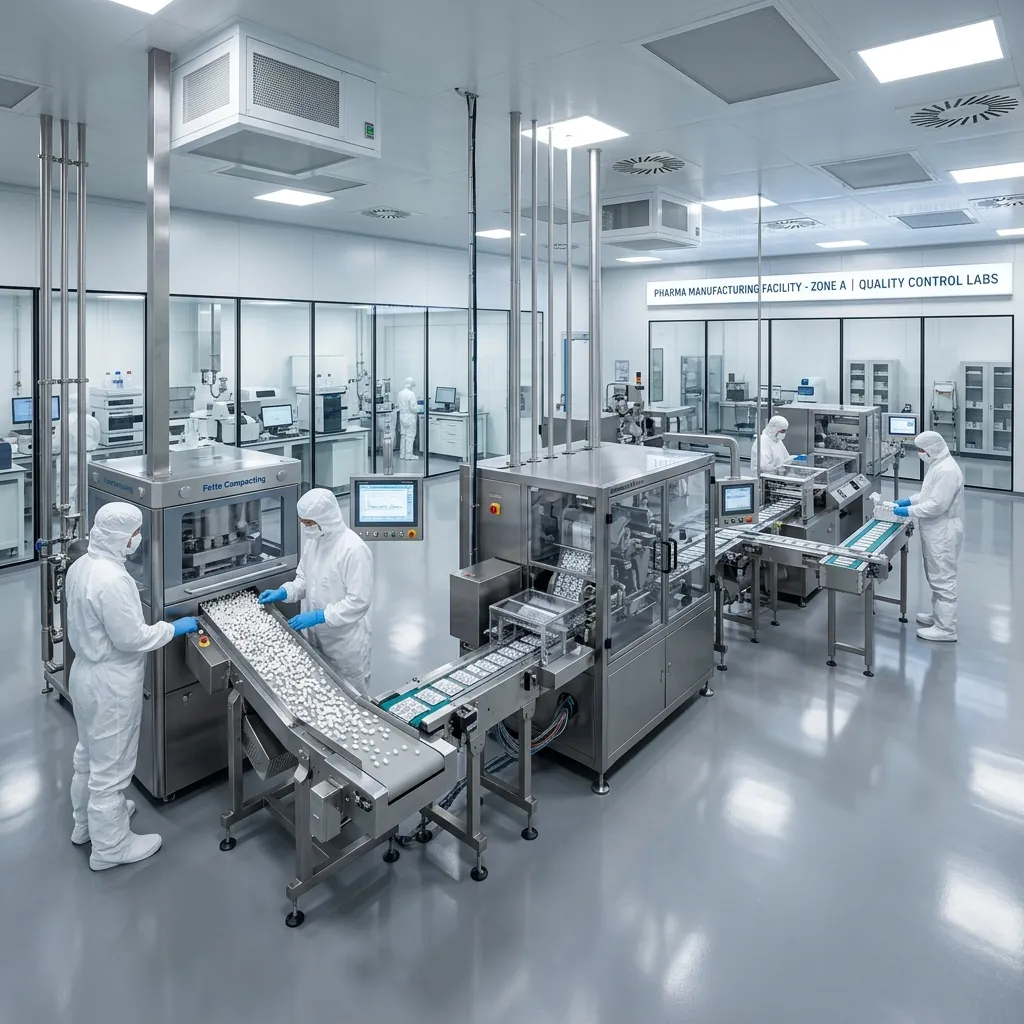
Plant Setup as per CGMP
Build a manufacturing facility that passes GMP audit from day one — CGMP-compliant plant design, systems and documentation for Ayush, nutraceutical and food operations, from layout to licence.
Service Overview
Setting up a manufacturing plant for Ayush products, nutraceuticals or food is not just a construction project — it is the creation of a facility that will have to satisfy Current Good Manufacturing Practices and pass regulatory audit before it can make a single saleable product. CGMP is the set of principles that ensure products are consistently made and controlled to quality standards appropriate to their use, and for these categories it is embedded in the licensing requirements. A plant built without CGMP in mind is a plant that will have to be expensively retrofitted, or worse, will fail its audit.
The right time to think about CGMP is before the plant is built, not after. The layout, the material and personnel flows, the environmental controls, the water systems, the equipment and the documentation all have to be designed around what GMP requires, and these are far cheaper to get right on the drawing board than to fix in concrete. We get involved at the design stage precisely because the most expensive CGMP mistakes are the ones baked into a finished building, where correcting them means demolition rather than a procedure change.
What CGMP demands varies by sector but shares a common spine. Ayush manufacturing is governed by the Good Manufacturing Practices set out in Schedule T of the Drugs Rules, with specific requirements for premises, equipment, and quality control of traditional-medicine products. Nutraceutical and food manufacturing carry their own GMP and hygiene requirements under the FSSAI framework. In each case, the facility has to be designed and operated so that contamination is controlled, processes are consistent, and quality is built in rather than inspected in.
Beyond the physical plant, CGMP is as much about systems and documentation as about walls and machines. A GMP-compliant operation runs on Standard Operating Procedures, batch manufacturing records, quality-control testing, validated processes, and the records that prove all of it happened — the documentation that an auditor will examine to confirm the facility does what it claims. A beautiful plant with no functioning quality system is not GMP-compliant, and building these systems is as central to the setup as the building itself.
A CGMP plant setup connects directly to the licensing and the products that follow. The facility is what an Ayush licence or an FSSAI licence inspection assesses, it is where your nutraceutical products will be made to the standards their compliance assumes, and its GMP standing underpins any export ambitions. Designed coherently with those endpoints in view, the plant supports the whole operation rather than being a standalone build that then has to be reconciled with what it must produce.
We guide the setup of CGMP-compliant plants for Ayush, nutraceutical and food operations — facility design and layout, the GMP systems and documentation, and preparation for the licensing audit — so your plant is built right the first time, passes its inspection, and operates to the standards its products and markets require.
Key Takeaways
- A cGMP plant is designed for compliance from the layout stage — material and personnel flow, air handling and water systems are decided before construction.
- Retrofitting GMP into a finished building is the most expensive way to do it; design-stage planning avoids it.
- The build ends where audit readiness begins: SOPs, validation and documentation carry the certification.
Why CGMP Belongs at the Design Stage
The single biggest lesson in plant setup is that CGMP has to be designed in, not added on. The flows of material and people, the segregation of clean and less-clean areas, the environmental and water systems, the finishes and the layout are all fixed when the building is built, and they either support GMP or they fight it. A plant designed for general manufacturing and then asked to meet GMP is a plant that needs walls moved, systems retrofitted and layouts reworked — at a cost far exceeding what it would have taken to design it correctly from the start.
This is why we engage at the design stage, working alongside your architects and engineers so the CGMP requirements shape the building rather than being imposed on it afterwards. The economics are decisive: an hour spent getting a flow or a control right on the drawing saves weeks of remedial construction and the risk of an audit failure. We treat the design phase as the highest-leverage moment in the whole plant setup, because it is where CGMP compliance is either built in or built out.
- Flows, segregation, water and environment are fixed at build.
- Retrofitting GMP into a finished plant means demolition, not tweaks.
- Designing CGMP in from the start is far cheaper and safer.
GMP for Ayush: Schedule T
Ayush manufacturing — Ayurvedic, Siddha, Unani and Homeopathic products — is governed by the Good Manufacturing Practices laid down in Schedule T of the Drugs and Cosmetics Rules, and a manufacturing licence for these products requires the facility to comply with it. Schedule T sets out requirements for the premises, the equipment, the sanitation, and the quality control of traditional-medicine manufacturing, adapted to the particular processes of the Ayush systems — the handling of herbs and raw materials, the preparation methods, the testing of often-complex natural products.
We design and set up Ayush plants to meet Schedule T, understanding both the letter of its requirements and the practical realities of Ayush manufacturing. Because Ayush products are made from natural materials with their own contamination and consistency challenges, a Schedule T-compliant facility has to address these specifically rather than generically. We build the plant and the quality systems around what Ayush GMP genuinely requires, so the licensing inspection finds a facility that is properly equipped and controlled for the products it makes.
GMP for Nutraceuticals and Food
Nutraceutical and food manufacturing carry their own GMP and hygiene requirements under the FSSAI framework, and while the vocabulary differs from Schedule T, the underlying principles are the same: control contamination, ensure consistency, and build quality into the process. A food or supplement plant has to address hygienic design, the flow of materials to prevent cross-contamination, pest control, water quality, and the sanitary practices that keep the product safe, all documented and demonstrable to an FSSAI inspection.
We set up food and nutraceutical plants to the applicable GMP and hygiene standards, matching the level of control to the product and its risk. A supplement facility handling sensitive ingredients needs tighter control than a simpler food operation, and getting that calibration right avoids both under-building, which fails the audit, and over-building, which wastes capital. We design the facility and its practices around genuine food-safety and quality requirements, so the plant is both compliant and sensibly proportioned to what it makes.
- Food and nutraceutical GMP focuses on hygiene and contamination control.
- Control is matched to the product and its risk.
- The facility must satisfy FSSAI inspection.
Systems and Documentation, Not Just a Building
A recurring misconception is that CGMP is about the building. In truth, a compliant operation is as much about its systems and paperwork as its physical plant. GMP runs on Standard Operating Procedures that define how everything is done, batch manufacturing records that document each production run, quality-control testing that verifies the product, validated processes that prove the methods work, and the records that evidence all of it. An auditor confirms compliance largely by reading these documents, so a plant without functioning systems is not GMP-compliant however impressive the building.
We build the quality systems and documentation alongside the physical setup, so the facility comes online with SOPs, records, testing regimes and validation genuinely in place and operating, not printed hastily before the audit. This documentation has to be real — used in daily production and reflecting what actually happens — because an inspector quickly detects paperwork that does not match practice. We create systems the operation can genuinely run on, so the plant is compliant in substance and not just in appearance.
Water, Environment and Contamination Control
Across Ayush, nutraceutical and food manufacturing, some technical elements recur as make-or-break for GMP: the water system, the environmental controls, and the overall approach to contamination. Water used in manufacturing has to be of appropriate quality and its treatment validated; the manufacturing environment has to be controlled to the degree the product requires; and the whole facility has to be designed and operated to prevent product being contaminated by materials, people, pests or cross-flows. These are the areas an experienced auditor probes hardest, because they are where product safety is genuinely determined.
We design these critical systems properly and proportionately — a water treatment and testing regime suited to the products, environmental controls matched to their sensitivity, and contamination-control practices woven through the layout and the procedures. Getting these right is central to both passing the audit and, more importantly, actually making safe, consistent product. We give them the attention they deserve, so the facility’s foundations of GMP are sound rather than superficially addressed and later found wanting.
Preparing for the Licensing Audit
The culmination of a CGMP plant setup is the licensing inspection — the Ayush licensing authority or the FSSAI assessing whether the facility meets the applicable GMP and can be licensed to manufacture. This audit examines the premises, the equipment, the systems and the documentation together, testing whether the plant is genuinely capable of consistently making conforming product. A well-set-up plant walks through this inspection; a poorly prepared one collects observations that delay the licence and hold up the whole launch.
We prepare the facility and the team for this audit as the natural conclusion of the setup, running through what the inspector will examine and closing any gaps beforehand. Because we have built the plant and its systems around the GMP requirements from the design stage, the inspection tends to confirm a compliant facility rather than expose a scramble. The outcome is the manufacturing licence — the goal the whole plant setup is aimed at — obtained cleanly because the facility was built, from the start, to earn it.
Required Documentation
"Accurate documentation is 70% of the battle. Our experts pre-audit every file before submission."
Our Delivery Workflow
Design
We design the facility and layout around the applicable CGMP requirements from the start.
Build Systems
We build the SOPs, records, water, QC and validation the operation will run on.
Contamination Control
We set up water, environmental and contamination-control systems properly.
Audit Ready
We prepare the plant and team for the GMP licensing inspection.
Frequently Asked Questions
Have questions? Find direct, humanized answers about the regulatory approvals and timelines.

Launch Your Product In Record Time
Red tape shouldn't decide your launch date. We keep the paperwork moving and the queries answered, so approvals come through sooner.