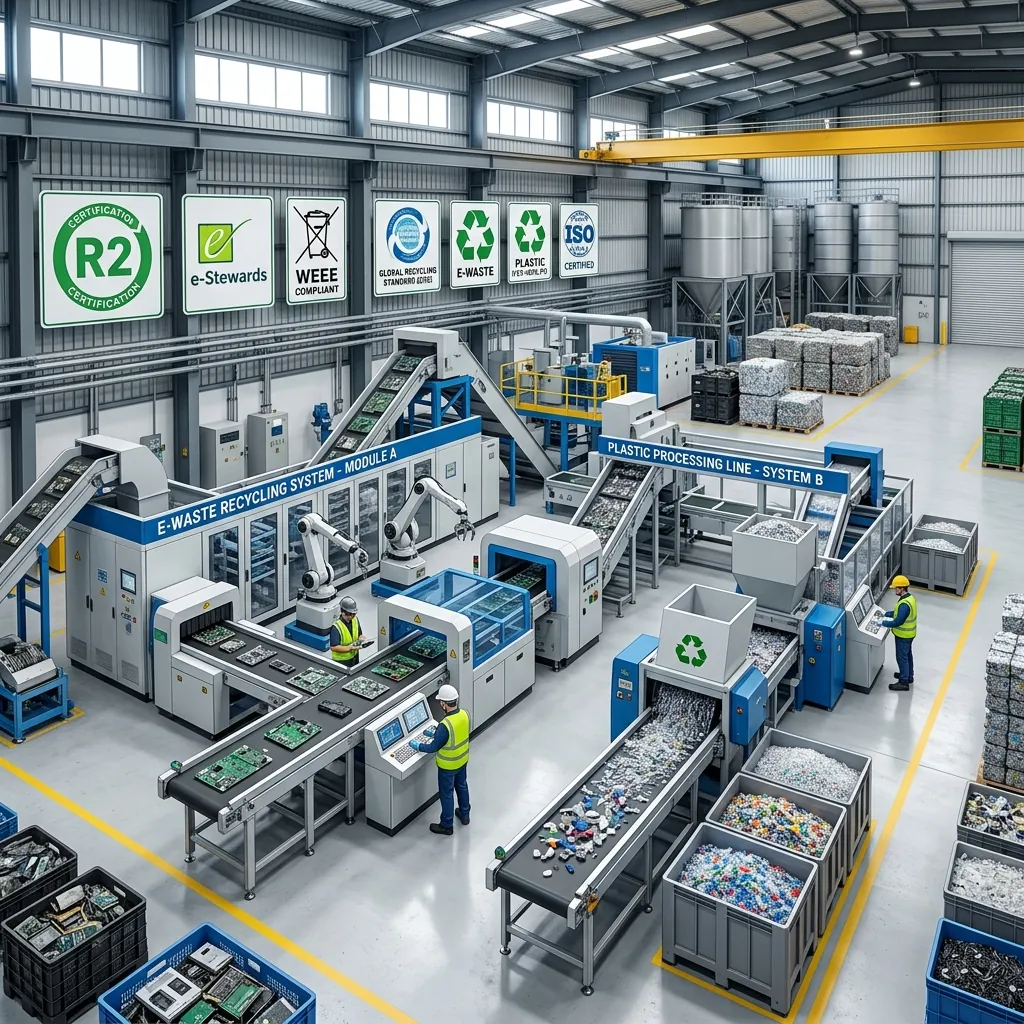
EPR & LMPC Registration
Extended Producer Responsibility on the CPCB portal and Legal Metrology compliance for packaged goods — the two obligations that catch importers, brand owners and manufacturers off guard at customs.
Overview
If you put packaging, electronics, batteries or tyres onto the Indian market, two separate regimes reach you. Extended Producer Responsibility makes you accountable for what your products become as waste, registered and tracked on the central CPCB portal. Legal Metrology governs how every pre-packaged commodity is declared and labelled.
This category covers both. On the EPR side you will find plastic, battery, e-waste and tyre registrations, each with its own targets and rules. On the Legal Metrology side you will find product-compliance registration for packaged goods and model approval for weighing and measuring instruments. Choose your obligation below.
EPR registration exists because India's waste-management rules place legal responsibility for end-of-life handling on the businesses that put a product on the market — not just the consumer who eventually discards it. A Producer, Importer or Brand Owner (PIBO) must register on the CPCB portal for each applicable waste stream, then meet annual recycling or collection targets that scale with the volume placed on the market. Falling short of a target does not simply invite a warning; it typically triggers an environmental compensation payment calculated against the shortfall.
Each waste stream carries its own mechanics. Plastic packaging EPR is split into categories based on packaging type — rigid, flexible, multi-layered — with separate targets for each. Battery waste EPR tracks the chemistry and weight of batteries placed on the market, feeding into extended producer targets for collection and recycling under the Battery Waste Management Rules. E-waste EPR applies to electrical and electronic equipment across dozens of notified product categories, with targets that increase over a phased multi-year schedule. Tyre waste EPR follows a similar registration-and-target structure for the tyre and rubber sector.
On the Legal Metrology side, the obligation is different in kind: it is about accurate, standardised declarations on every pre-packaged commodity sold in India, not about end-of-life recycling. Importers bringing pre-packaged goods into India need an LMPC (Legal Metrology Packaged Commodities) importer registration before shipments can clear customs, and the package itself must carry mandatory declarations — MRP, net quantity, manufacturing details, and a consumer-care contact — in the prescribed format. Manufacturers and repackers inside India face the same labelling standard even without the import-registration step.
The two regimes frequently apply to the same product at the same time. An imported electronic appliance, for example, can trigger e-waste EPR registration because of what it becomes at end of life, and separately require LMPC registration because it arrives as a pre-packaged commodity that needs compliant labelling before it clears customs. Missing either one does not just risk a penalty later — it can hold a shipment at the port while the gap gets fixed, which is why we map both obligations together at the start of an engagement rather than treating them as separate projects.
The CPCB portal itself is where many registrations stall, because it demands data in a specific structure — product categories, quantities, recycler tie-ups and financial details all have to reconcile before a registration is granted or an annual return is accepted. Small inconsistencies between what a business declares on the portal and what its import or production records show are a common trigger for portal rejections and follow-up scrutiny. We prepare the underlying data to match the portal's exact requirements before filing, rather than discovering the mismatch after the system rejects a submission.
Annual filing is where most EPR registrations actually get tested. Registering on the CPCB portal is the easy part; the harder, recurring obligation is filing accurate quantity data each year and demonstrating that recycling or collection targets were met, usually through certificates from registered recyclers or dismantlers. A business that registers but then fails to file consistent, defensible annual returns can find itself facing a compensation demand based on estimated rather than actual figures — which is almost always worse than the number a properly documented filing would have produced.
It is also worth understanding that EPR obligations can be met either directly or through a Producer Responsibility Organisation (PRO) that arranges collection and recycling on a producer's behalf. For many importers and brand owners without their own reverse-logistics network, working through a registered recycler or PRO is the practical way to hit targets — but the legal responsibility, and the compensation risk if targets are missed, still sits with the registered PIBO. We help clients structure these arrangements so the recycling credits they rely on are genuinely defensible against a CPCB audit, not just paper assurances.
For businesses bringing new products into India for the first time, we recommend mapping EPR and Legal Metrology obligations before finalising packaging design and product labelling — not after the first shipment is already at customs. A packaging format decided without EPR categories in mind, or a label printed without the mandatory LMPC declarations, both mean a costly rework cycle that a short compliance review at the design stage would have avoided entirely. This is typically the single highest-value conversation we have with a new importer client.
Key Takeaways
- EPR is mandatory for Producers, Importers and Brand Owners — registered on the CPCB portal.
- Each waste stream (plastic, battery, e-waste, tyre) carries its own recycling targets.
- Importers of pre-packaged goods need LMPC registration before customs clearance.
- Missing an annual EPR target typically triggers an environmental compensation payment, not just a warning.
- A single imported product can need both e-waste EPR and LMPC registration at the same time.
Services in This Category
EPR Registration
Legal Metrology
Frequently Asked Questions

Not Sure Which Service You Need?
Tell us about your product and target market. We will point you to the exact approval that applies and what it takes.