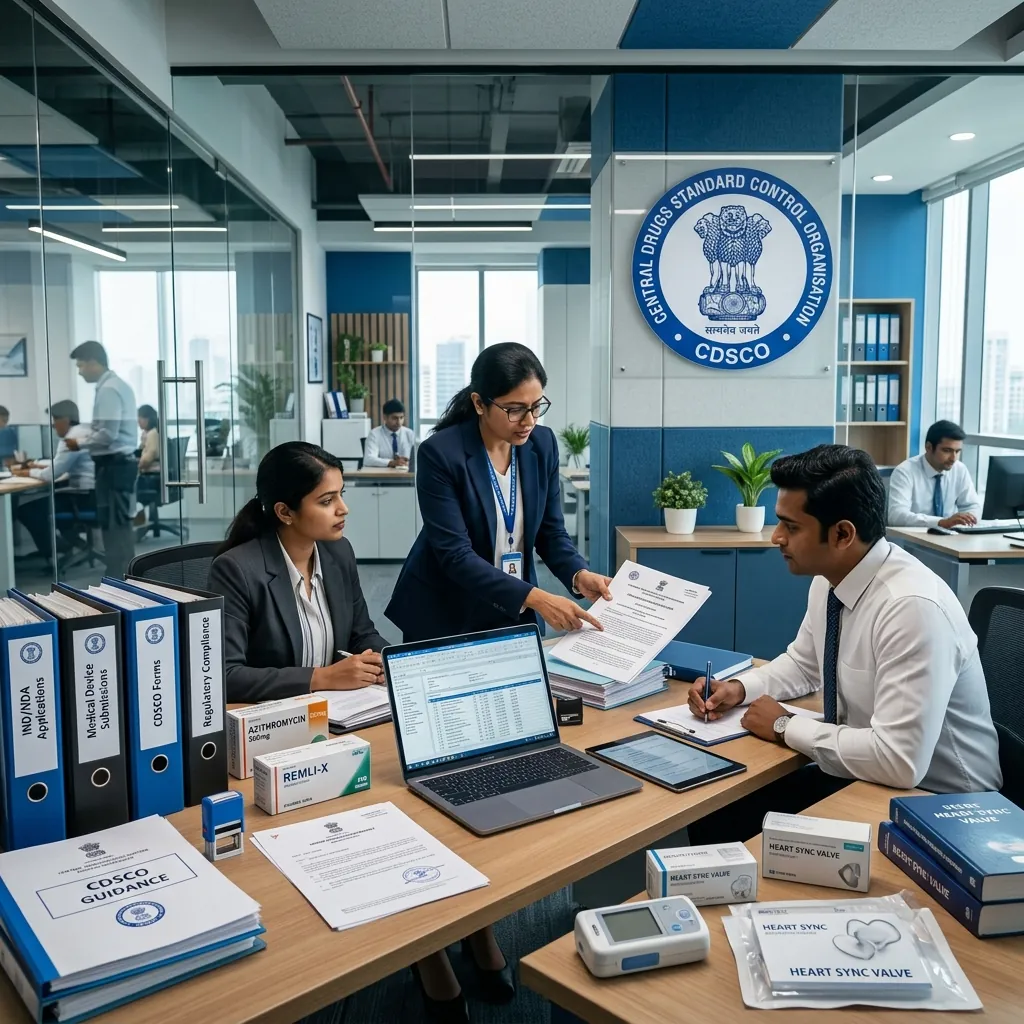
CDSCO Compliance Medical Devices & IVDs
Everything a medical-device or IVD company needs to get licensed and stay licensed in India — from classification and dossier work to manufacturing, import and quality systems, under one roof.
Overview
Selling a medical device in India runs through one authority: the Central Drugs Standard Control Organisation. Whether you make devices here, import them, or are standing up a factory from scratch, the same rulebook applies — the Medical Devices Rules, 2017 — and the same question decides your path: what class is your device, and which office signs off on it.
This category pulls together the full CDSCO journey. Registrations and licences cover the approvals themselves. The turnkey project services help you build a compliant facility before you ever file. The quality-system services keep you audit-ready afterwards. Below you will find every service in this area; each page goes deep on documents, timelines and the mistakes that cause rejections.
Classification is the decision everything else follows from. Class A devices — low risk, like tongue depressors and surgical retractors — go through the lightest state-level process. Class B, C and D devices climb in scrutiny, with Class D covering the highest-risk implants and life-support equipment reviewed directly by central CDSCO with an expert committee. Get the class wrong at the start and the error surfaces later as a rejected application, sometimes after months of testing and documentation work that has to be redone.
Domestic manufacturers apply for a manufacturing licence tied to their physical site — Form MD-5 for State Licensing Authorities handling Class A and B devices, or Form MD-9 for central CDSCO handling Class C and D, each preceded by a joint inspection of the manufacturing premises. Foreign manufacturers do not go through a manufacturing licence at all; instead they appoint an Authorised Indian Agent, register on Form MD-14, and receive an MD-15 import licence that lets that device be imported and sold in India indefinitely, subject to renewal and any changes in the underlying approval.
Underneath both routes sits the quality management system. CDSCO expects manufacturers to operate under ISO 13485, and reviewers check for it whether or not the form explicitly asks — a Device Master File without a credible QMS behind it draws immediate scrutiny. For companies setting up a new manufacturing line, our turnkey project services cover facility layout, documentation systems and staff training so the plant passes its CDSCO inspection the first time, rather than treating quality as an afterthought bolted on before the audit.
Timelines vary sharply by class and route. A Class A or B state licence can move in a matter of weeks once the dossier is complete. An MD-9 manufacturing licence or an MD-15 import licence for a Class C or D device more commonly runs six to nine months, factoring in the expert-committee review and any queries that come back. The single biggest lever on that timeline is dossier quality at first submission — a technical file with the classification, test reports and Plant Master File aligned from the outset avoids the query cycles that push timelines out by months.
IVDs (in vitro diagnostics) follow the same Medical Devices Rules framework but carry their own classification quirks worth flagging separately. A diagnostic kit used to screen blood donations, for example, sits in a materially different risk class than a general lab reagent, even though both might look like similar products on a shelf. We handle IVD classification and licensing with the same rigour as therapeutic devices, because CDSCO reviewers apply the same level of scrutiny to both categories, and an IVD dossier prepared casually fails technical review just as readily as a device dossier would.
Beyond the initial licence, ongoing compliance is its own discipline. A manufacturing or import licence is not a one-time event — any change to the device design, the manufacturing site, or the labelling can require an amendment filing, and licences themselves carry renewal cycles that need tracking. Companies that treat the certificate as the finish line often discover, at the worst possible moment, that a minor design change was never reported and technically invalidated their approval. We build renewal and change tracking into every engagement from day one so a client's CDSCO status stays current, not just initially compliant.
The queries a reviewer raises mid-review are frequently where a filing actually succeeds or fails. CDSCO reviewers routinely come back with clarification requests on test methodology, labelling claims, or Plant Master File details — and how quickly and precisely those queries get answered often determines whether an application clears in one review cycle or drags through several. Our query desk is staffed by the same specialists who prepared the original dossier, so responses go out with full context rather than starting from scratch on each round.
Key Takeaways
- One authority (CDSCO) governs every medical device and IVD sold in India.
- Device class — A, B, C or D — sets the form, the fee, the office and the timeline.
- This category spans licences, imports, manufacturing, QMS and full turnkey setup.
- A working ISO 13485 quality system is effectively required, not optional paperwork.
- Foreign manufacturers need an Authorised Indian Agent before an MD-15 import licence can be filed.
Services in This Category
Turnkey Project Consultant
Registrations & Licenses
Regulatory Services
Quality Management System
Related Services
Frequently Asked Questions

Not Sure Which Service You Need?
Tell us about your product and target market. We will point you to the exact approval that applies and what it takes.