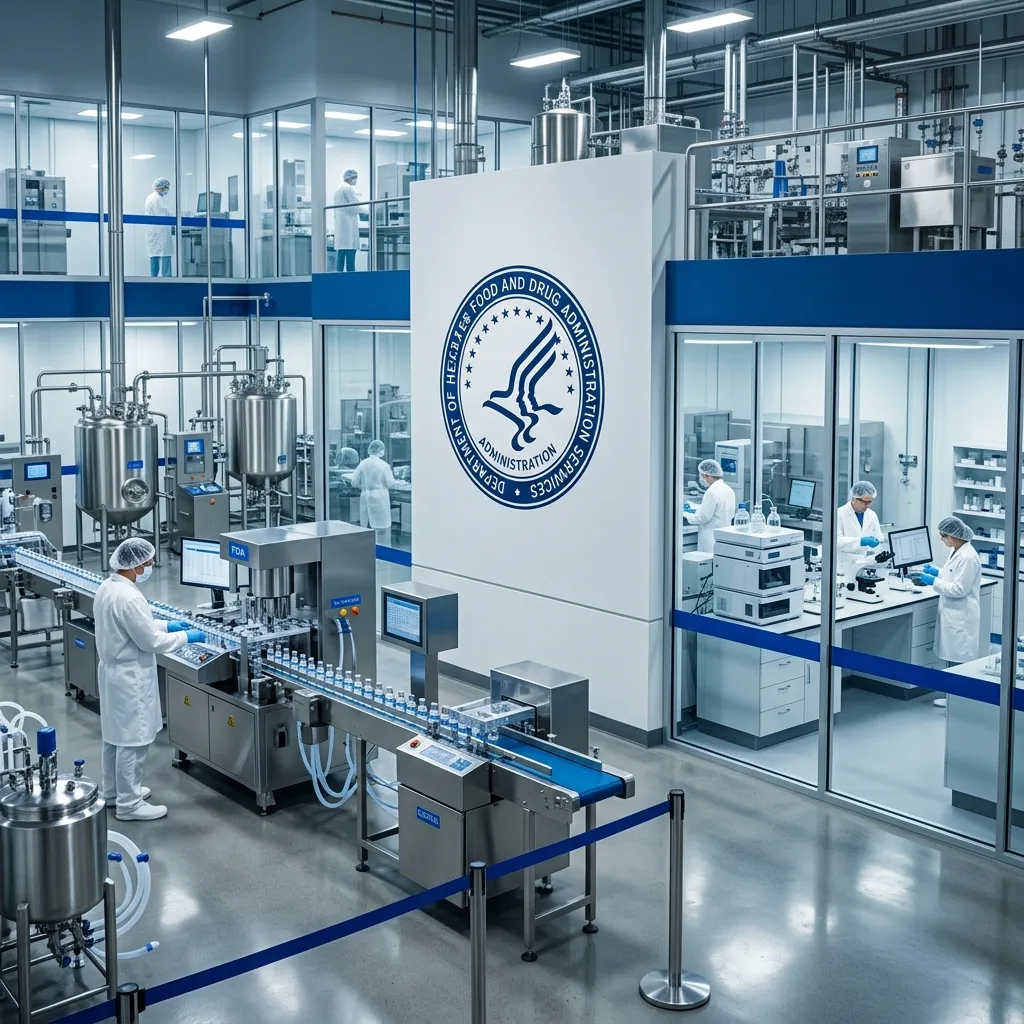
USFDA Compliance US Market Access
Take a device into the United States without guessing the pathway. Strategy, establishment registration, 510(k) submissions, radiation reports and SaMD — mapped to how the FDA actually reviews.
Overview
The US is the largest medical-device market in the world, and the FDA is one of the most exacting regulators in it. The difference between a smooth launch and an expensive stall is almost always the same thing: choosing the right regulatory pathway before you spend on testing and documentation.
The services in this category cover the full US route — deciding between 510(k), De Novo, PMA or exempt; registering your establishment and listing your devices; preparing an eSTAR 510(k); and handling software (SaMD) and radiation-emitting products. Each page below explains the requirement and how we keep the FDA review clock moving.
Everything in the US system flows from one decision: the regulatory pathway. Most devices reach the market through a 510(k) premarket notification, which clears a device on the basis of substantial equivalence to a legally marketed predicate. A genuinely novel low-to-moderate-risk device with no predicate uses the De Novo route, while the highest-risk devices require a full Premarket Approval (PMA) with clinical evidence. Some low-risk products are exempt from premarket submission altogether but still carry registration, listing and Quality System obligations. Picking the wrong track wastes months and money, so we run a formal pathway assessment before any testing budget is committed.
Foreign manufacturers cannot deal with the FDA directly. Before an establishment can be registered, the manufacturer must appoint a US Agent physically located in the United States who acts as the FDA's point of contact. Establishment registration and device listing are then completed in the FDA's FURLS/DRLM system, and both are annual obligations that must be renewed every year between October and December — a lapse quietly removes your legal ability to market. We provide US Agent services and manage the registration and annual renewals so nothing expires unnoticed.
The 510(k) itself is now filed almost entirely through the electronic eSTAR template, which structures the submission and reduces the administrative rejections that used to stall files at the front door. A strong 510(k) turns on the predicate comparison, the performance testing (bench, biocompatibility to the ISO 10993 series, electrical safety and EMC where relevant), and a clear substantial-equivalence argument. Software as a Medical Device (SaMD) and radiation-emitting electronic products carry their own additional requirements — cybersecurity documentation for connected software, and radiation-safety reporting for emitting products — which we build into the submission from the start.
Underneath all of it sits the Quality System Regulation (21 CFR Part 820), which the FDA is harmonising with ISO 13485. A device can be cleared and still be non-compliant if the manufacturing quality system is not in order, and FDA inspections focus heavily on it. For companies already holding CE marking or an Indian CDSCO licence, much of the technical evidence is reusable — we map what you already have against the FDA's requirements so you are not rebuilding a dossier from scratch, and one coordinated programme can serve the US, EU and Indian markets together.
A typical engagement moves in a set order. We start with a regulatory strategy assessment that confirms the device class and pathway and flags any predicate, testing or clinical gaps. We then act as your US Agent, complete establishment registration and device listing, and build the submission — assembling the predicate comparison, performance and biocompatibility testing, labelling, and the substantial-equivalence argument into the eSTAR template. After filing, we manage the FDA's Additional Information requests, which is where timelines are usually won or lost: a fast, complete response to an AI hold keeps a 510(k) inside its normal review window instead of letting it drift for months.
Because the FDA charges annual establishment-registration fees and expects continuous Quality System compliance, US market access is an ongoing relationship rather than a one-time filing. We track your annual registration and listing renewals, keep your device listings current as you add or change products, and help you prepare for FDA inspections of your quality system. For manufacturers new to the US, that ongoing support is often the difference between a licence that stays live and one that quietly lapses because a renewal window was missed.
Working from our base in Dadri, Gautam Buddha Nagar (Delhi NCR), we support Indian manufacturers exporting to the United States and foreign manufacturers who want a single partner for both their US and Indian filings. Because our team also handles CDSCO, BIS and CE work, we can align an FDA programme with the other approvals your device needs rather than treating the US in isolation. If you are weighing a US launch, the earliest and cheapest regulatory money you will spend is a pathway assessment before you commit to testing — the services below cover each step, and our consultants can map the full route for your specific device before you build it.
Key Takeaways
- Getting the pathway right (510(k), De Novo, PMA) is the decision that sets cost and timeline.
- Foreign manufacturers need a US Agent before establishment registration will go through.
- Registration and listing are annual obligations, renewed every October–December.
- A 510(k) is a clearance by substantial equivalence, not an approval; PMA is for the highest-risk devices.
- Compliance with the Quality System Regulation (21 CFR 820, aligning with ISO 13485) is checked at inspection, not just at clearance.
Services in This Category
Frequently Asked Questions

Not Sure Which Service You Need?
Tell us about your product and target market. We will point you to the exact approval that applies and what it takes.