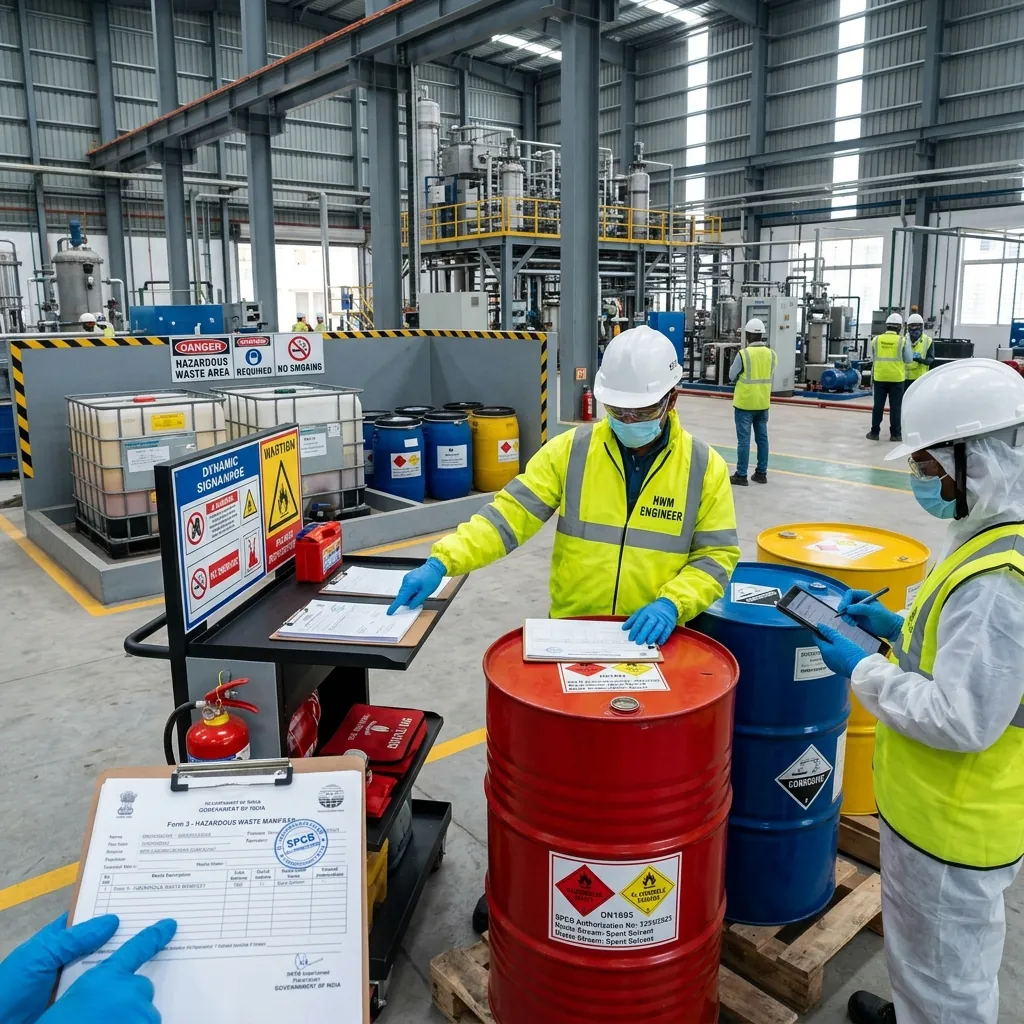
Waste Management Compliance
Regulatory compliance for hazardous waste, biomedical waste, and solid waste management under Central Pollution Control Board and State PCB regulations.
Service Overview
Waste management compliance in India covers multiple regulatory frameworks: Hazardous and Other Wastes (Management and Transboundary Movement) Rules 2016, Bio-Medical Waste Management Rules 2016, Solid Waste Management Rules 2016, and Construction & Demolition Waste Management Rules 2016.
Every organization that generates regulated waste categories must obtain authorization from their State Pollution Control Board, maintain waste generation records, arrange for proper treatment and disposal through authorized operators, and file annual returns.
MedRegX India provides comprehensive waste management compliance services — from waste characterization and authorization applications to waste management plan development, operator identification, and regulatory compliance monitoring.
Key Takeaways
- Any unit that generates hazardous or bio-medical waste needs an authorisation from the State Pollution Control Board before it operates.
- Authorisation is granted under waste-specific rules — Hazardous & Other Wastes Rules, Bio-Medical Waste Rules — each with its own forms and conditions.
- You must dispose of waste only through authorised facilities (TSDFs, CBWTFs) and keep an auditable trail of every movement.
- Annual returns and manifests are mandatory — a gap in the paper trail is one of the most common findings.
- Waste authorisation sits alongside PCB consent and EPR — they are separate obligations that must all be in place.
Authorisation Is About Proving Where the Waste Goes
Waste-management compliance is fundamentally about traceability: the regulator wants to know that every stream of hazardous or bio-medical waste your unit generates is handled and disposed of through an authorised route, and that you can prove it. A generator must obtain authorisation from the State Pollution Control Board, declare the categories and quantities of waste produced, and tie each stream to an authorised treatment, storage and disposal facility (TSDF) or, for medical waste, a common bio-medical waste treatment facility (CBWTF). Sending waste to an unauthorised handler — or being unable to document where it went — is treated as seriously as not treating it at all.
The applicable rules depend on what you generate. Manufacturing units fall under the Hazardous and Other Wastes (Management and Transboundary Movement) Rules; hospitals, clinics and labs fall under the Bio-Medical Waste Management Rules; and specific streams like e-waste, plastic and batteries carry their own regimes. Each has distinct authorisation forms, storage conditions, labelling and record-keeping requirements. We identify every waste stream your operation produces and the exact authorisation each one needs, so nothing is left uncovered.
- SPCB authorisation covering each hazardous / bio-medical waste stream.
- Tie-ups with authorised TSDF / CBWTF disposal facilities.
- Manifests and movement documents for every consignment.
- Compliant on-site storage, labelling and segregation.
The Paper Trail That Keeps You Compliant
Most waste-management penalties are not for mishandling waste but for failing to document it. The rules require manifests for each movement of waste, records of quantities generated and disposed, and annual returns filed with the Pollution Control Board. When an inspector arrives, the question is rarely whether waste is being disposed of, but whether the records reconcile — do the quantities generated, stored and sent for disposal add up, and is every consignment accounted for. A gap in that trail is a finding even when the underlying handling is sound.
We set up the record-keeping so it holds: a waste-management plan that matches your actual operation, manifest and register systems that staff can realistically maintain, and a calendar for the annual returns and renewals that are easy to miss. Because waste authorisation, Pollution Control Board consent (CTE/CTO) and EPR registration are separate obligations that often apply to the same unit at once, we coordinate them together so a business meets all of its environmental responsibilities as one coherent programme rather than discovering a missing piece during an inspection.
Required Documentation
"Accurate documentation is 70% of the battle. Our experts pre-audit every file before submission."
Our Delivery Workflow
Waste Audit
Conduct comprehensive waste audit to identify all waste streams, quantities, and applicable regulatory categories.
Authorization Application
Prepare and submit hazardous/bio-medical waste authorization application to SPCB with complete documentation.
Compliance Plan
Develop a waste management plan, identify authorized treatment/disposal facilities, and establish tracking systems.
Annual Compliance
Manage annual returns, track waste movement documents, and ensure ongoing compliance with waste management rules.
Frequently Asked Questions
Have questions? Find direct, humanized answers about the regulatory approvals and timelines.

Launch Your Product In Record Time
Red tape shouldn't decide your launch date. We keep the paperwork moving and the queries answered, so approvals come through sooner.