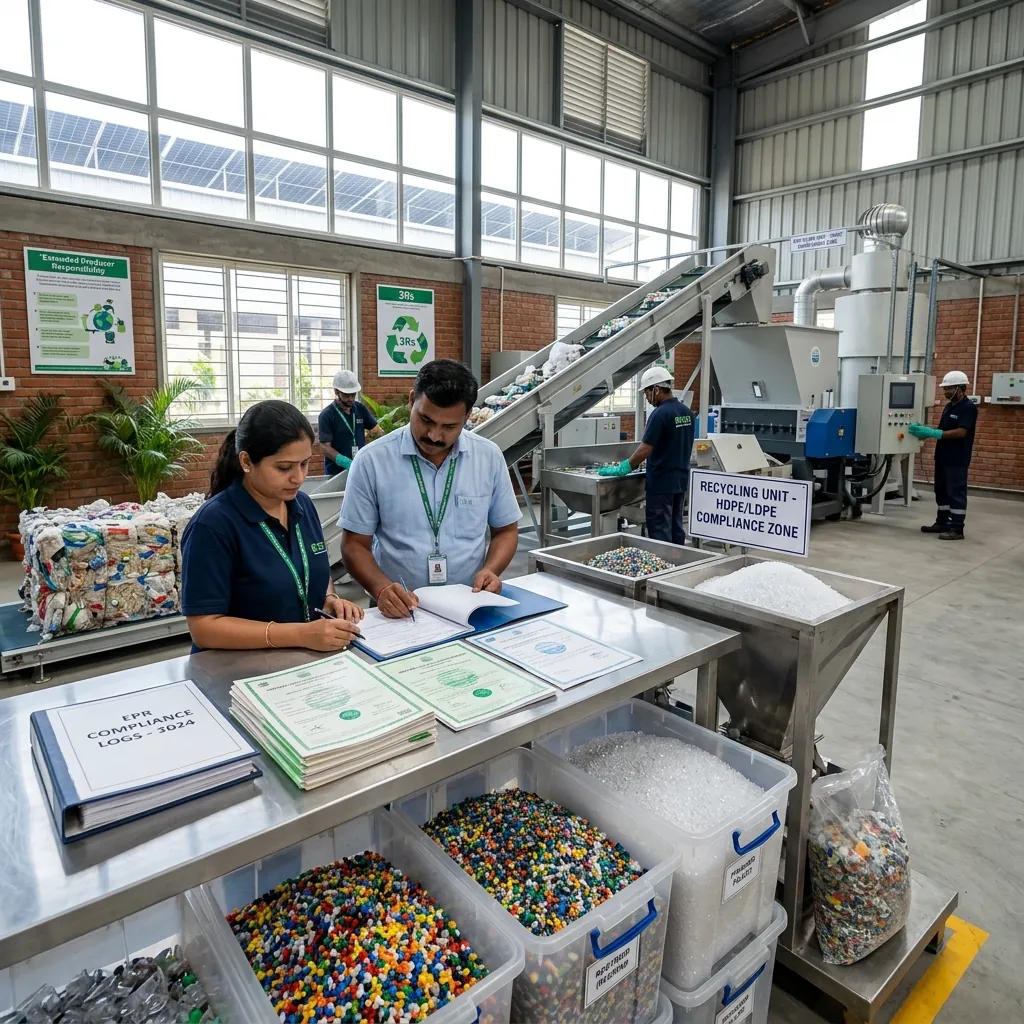
EPR Registration for E-Waste
Extended Producer Responsibility for electronics under the E-Waste Management Rules 2022 — CPCB registration, EEE coverage, recycling targets and annual fulfilment for producers and importers of electrical and electronic equipment.
Service Overview
Electronics have a short life and a heavy environmental footprint at end of life, and India has responded with one of its more mature Extended Producer Responsibility regimes: the E-Waste Management Rules, 2022. Under these rules, any producer or importer of electrical and electronic equipment is responsible for ensuring an equivalent quantity of e-waste is collected and recycled when their products are discarded. For anyone making or importing electronics — from consumer gadgets to IT hardware to a growing list of appliances — e-waste EPR is a mandatory, actively enforced obligation.
The rules apply to producers of electrical and electronic equipment, or EEE, which is a broad and expanding universe. If you manufacture electronics, import them, or sell electronic products under your brand, you are a producer with e-waste obligations, and the scope covers a defined and growing schedule of equipment categories — IT and telecommunications equipment, consumer electronics, appliances, medical devices with electronics, and more. Establishing that you are covered, and under which categories, is where compliance begins.
E-waste EPR is administered through the CPCB’s centralised portal, where producers register, record their EEE categories and quantities, and later report and fulfil their obligations. The e-waste regime has been running longer than some of its counterparts and is correspondingly well-established and enforced, so accurate registration and category data are important — they underpin the targets you will be held to and the returns you will file each year.
Obligations take the form of recycling targets tied to what you place on the market. Based on the quantity and category of EEE you introduce — with the framework accounting for the lag between when products are sold and when they become waste — you are assigned quantities of e-waste that must be collected and recycled through registered recyclers each year. Calculating these targets correctly from your placed-on-market data is central to both meeting the obligation and controlling its cost.
Fulfilment is evidenced through EPR certificates from registered e-waste recyclers who have processed the requisite quantities, which producers obtain to meet their targets. Managing this — determining what you need, sourcing valid certificates from genuine recyclers who handle e-waste responsibly, and filing accurate annual returns that reconcile EEE placed against e-waste recycled — is the ongoing core of the obligation, and a shortfall triggers environmental compensation under a well-enforced regime.
We handle e-waste EPR end to end — establishing your producer status and EEE categories, registering you on the CPCB portal, calculating your recycling targets, guiding the procurement of valid EPR certificates, and filing your annual returns — so your electronics Extended Producer Responsibility is met correctly under a mature and consequential framework.
Key Takeaways
- The E-Waste Management Rules, 2022 cover a defined list of electrical and electronic equipment under Schedule I.
- Producers register on the CPCB portal and meet rising annual collection targets set as a percentage of past sales.
- RoHS conformity (restricted hazardous substances) sits alongside EPR as a parallel obligation for covered products.
The E-Waste Management Rules 2022
India’s e-waste regime has evolved over several iterations into the E-Waste Management Rules, 2022, which sharpened the EPR model and moved to a more streamlined, certificate-based system of fulfilment administered centrally by the CPCB. The rules place clear responsibility on producers of electrical and electronic equipment to ensure that the e-waste their products eventually become is collected and recycled, and they express this as measurable targets rather than vague duties. Among India’s producer-responsibility regimes, e-waste is one of the more established and firmly enforced.
For a producer, this maturity cuts both ways: the framework is clearer and more predictable than newer regimes, but it is also better enforced, so casual non-compliance is more likely to be caught and penalised. Understanding the current rules and how the certificate-based fulfilment works is important, because the e-waste regime has changed meaningfully over its versions and advice based on an older iteration can mislead. We work with the current rules so your compliance reflects how the regime actually operates today.
- The E-Waste Rules 2022 sharpened the EPR and certificate model.
- Responsibility rests with producers of electrical/electronic equipment.
- E-waste is among India’s more established, enforced EPR regimes.
Who Is a Producer of EEE
The e-waste rules apply to producers of electrical and electronic equipment, and the definition captures manufacturers, importers and brand owners of EEE alike. If you make electronics, import them, or sell electronic products under your own brand regardless of who manufactured them, you are a producer with e-waste obligations. The category of EEE is broad — IT and telecom equipment, consumer electronics, large and small appliances, lighting, medical devices with electronics, and more — and the schedule of covered equipment has expanded over time.
Confirming your producer status and the EEE categories your products fall under is the essential first step, because these determine your obligations and targets. As with other EPR streams, businesses are sometimes unaware they are covered — a company selling branded electronic products it does not manufacture is still a producer for e-waste purposes. We assess your business against the producer definition and map your products to the EEE categories, so your obligation is understood precisely from the outset.
Registration and EEE Categories
Producers of EEE must register on the CPCB’s centralised e-waste portal, recording their producer details, the categories of equipment they place on the market, and the quantity data that will drive their targets. This registration establishes you in the regime and creates the account for your ongoing reporting and fulfilment. Because e-waste targets are category-based and the schedule of covered equipment is specific, capturing your EEE categories and quantities accurately at registration is foundational to the whole compliance.
We manage the CPCB registration and ensure your EEE categories and placed-on-market quantities are recorded correctly, since these feed directly into the recycling targets you will be held to. Electronics producers often have diverse product ranges spanning several EEE categories, and getting that categorisation right matters for accurate targets. We set this foundation properly so your targets and returns rest on sound, correctly categorised data.
Recycling Targets for E-Waste
Your e-waste obligation is a recycling target derived from the EEE you place on the market, with the framework recognising that electronics do not become waste immediately — there is a lag between sale and disposal, and the target calculation accounts for this relationship between what you put on the market and what is expected to arrive as e-waste. The target is the quantity of e-waste, in your categories, that you must ensure is collected and recycled through registered recyclers each year, and it grows as your market presence does.
We calculate your e-waste targets accurately from your placed-on-market data and the applicable methodology, because the target defines the scale and cost of your obligation. Understating your figures creates a compliance shortfall; overstating them inflates your recycling spend unnecessarily. Given that e-waste is a well-enforced regime, getting the target right is both a compliance necessity and a cost-control measure, and we treat the calculation with the precision it warrants so your obligation is neither under- nor over-stated.
- Targets derive from EEE placed on the market, with a sale-to-waste lag.
- The target is the e-waste you must ensure is collected and recycled.
- Accurate calculation controls both compliance and cost.
EPR Certificates and Registered Recyclers
Producers meet their e-waste targets by obtaining EPR certificates from registered e-waste recyclers who have processed the requisite quantities, evidencing that recycling was done on their behalf. E-waste recycling is a domain with a long history of informal, environmentally harmful processing, which is precisely why the formal regime channels fulfilment through registered recyclers — so that the recycling behind a certificate is genuine and responsible rather than notional. Sourcing valid certificates from legitimate registered recyclers is therefore central to real compliance.
We guide you through procuring valid EPR certificates to meet your e-waste targets — determining what you need by category, sourcing from genuinely registered recyclers, and ensuring the certificates are valid and correctly attributed to you. Because the integrity of e-waste recycling is a real concern and enforcement looks at it, care in certificate procurement matters. We help ensure the certificates that discharge your obligation reflect genuine, registered recycling, so your compliance is sound and defensible.
Annual Returns and Staying Compliant
E-waste EPR runs on an annual cycle: each year you report the EEE placed on the market and demonstrate fulfilment of the corresponding target through your EPR certificates, filing returns on the CPCB portal that reconcile the two. A mismatch — EEE placed without matching e-waste recycling accounted for — is what flags a shortfall and can trigger environmental compensation, and because e-waste is well enforced, such shortfalls are genuinely pursued rather than overlooked.
We manage the annual returns and reconciliation, keeping your placed-on-market data, targets and certificates aligned so the return demonstrates clean fulfilment. Because the e-waste regime is established and actively enforced, keeping accurately on top of this annual accounting is real risk management for an electronics business. We hold the compliance thread across the year and reconcile it correctly at return time, so your e-waste EPR is a controlled, predictable obligation rather than an enforcement exposure waiting to surface.
Categories of Covered Equipment
| Category | Examples |
|---|---|
| IT & telecom | Laptops, phones, printers |
| Consumer electronics | TVs, audio equipment |
| Large / small appliances | ACs, washing machines, mixers |
| Medical devices | Covered non-implantable equipment |
Required Documentation
"Accurate documentation is 70% of the battle. Our experts pre-audit every file before submission."
Our Delivery Workflow
Status & Categories
We establish your producer status and EEE categories and compile placed-on-market data.
Register
We register you on the CPCB e-waste EPR portal with accurate category data.
Targets & Certificates
We calculate recycling targets and guide procurement of valid EPR certificates.
Returns & Upkeep
We file annual returns, reconcile fulfilment, and keep the compliance current.
Frequently Asked Questions
Have questions? Find direct, humanized answers about the regulatory approvals and timelines.

Launch Your Product In Record Time
Red tape shouldn't decide your launch date. We keep the paperwork moving and the queries answered, so approvals come through sooner.