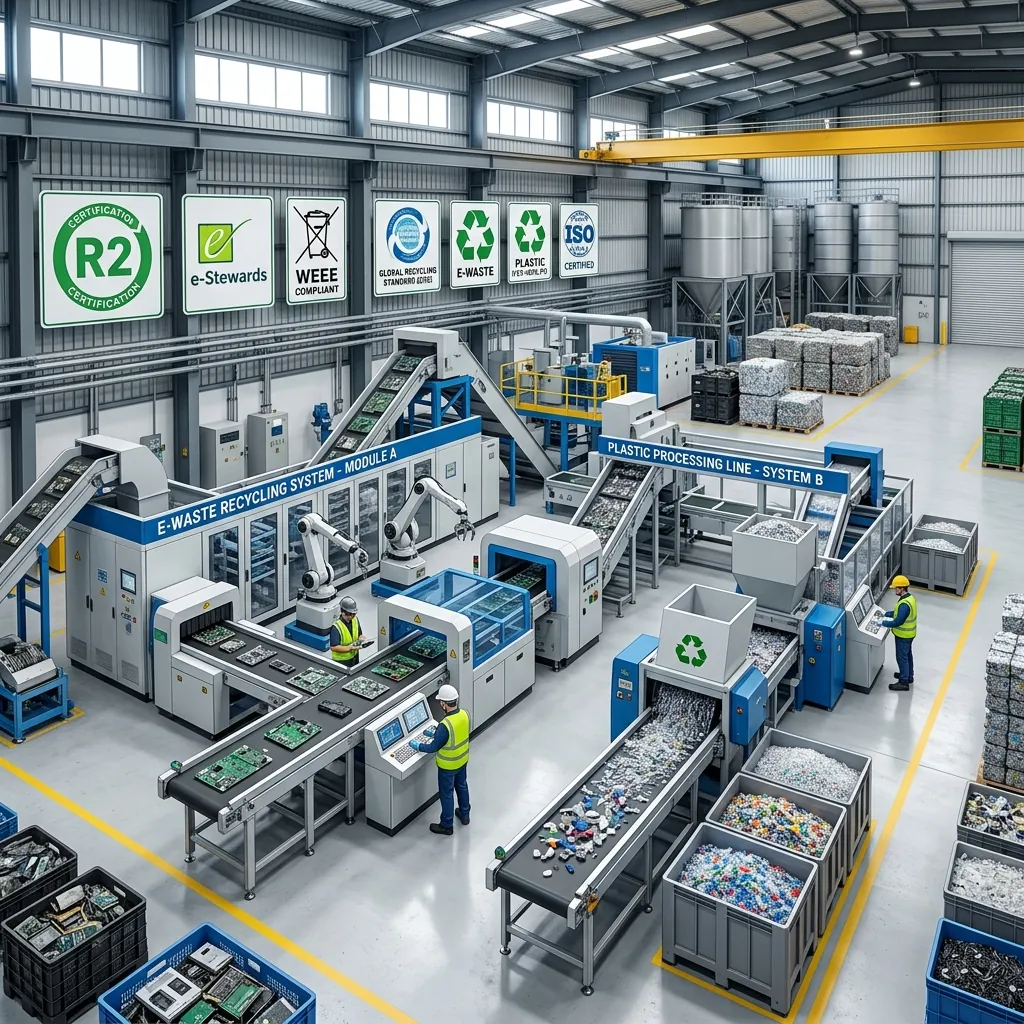
EPR Registration for Plastic Waste
Meet your Extended Producer Responsibility for plastic packaging — CPCB registration, EPR target calculation, and annual fulfilment through EPR certificates, for producers, importers and brand owners.
Service Overview
If your business puts plastic packaging into the Indian market — whether you manufacture it, import it, or sell products wrapped in it under your brand — you almost certainly carry Extended Producer Responsibility for that plastic. EPR is the principle, now firmly embedded in India’s Plastic Waste Management Rules, that the producer of packaging is responsible for ensuring an equivalent quantity is collected and recycled or processed at end of life. It is a mandatory obligation, enforced through registration and annual fulfilment, and ignoring it exposes a business to environmental compensation and enforcement.
The rules apply to Producers, Importers and Brand Owners — collectively PIBOs — and the first task is often simply recognising that you are one. A brand owner who has never manufactured a gram of plastic is still responsible for the plastic packaging their products carry; an importer is responsible for the packaging that comes in with their goods. Many businesses are surprised to learn they are PIBOs at all, and establishing your status and category is the starting point of EPR compliance.
Every PIBO has to register on the CPCB’s central EPR portal, and that registration is the gateway to the whole regime. It establishes you in the system, records your details and your plastic categories, and is the platform through which you will later report and fulfil your obligations. Getting the registration right — the correct entity type, the accurate plastic categories, the supporting data — sets up everything that follows, and errors here propagate into your targets and returns.
The substance of EPR is the target. Based on the quantity of plastic packaging you introduce, and the category of that plastic — rigid, flexible, multilayered, compostable — you are assigned recycling and processing obligations, expressed as quantities you must ensure are collected and processed each year. These targets are calculated from your data, and getting the quantities and categories right is crucial, because they define the size of your obligation and, ultimately, your cost of compliance.
Fulfilment happens through EPR certificates. You meet your targets by obtaining EPR certificates from registered recyclers and processors who have handled the requisite quantities of plastic waste, effectively evidencing that recycling was done on your behalf. Managing this — calculating what you need, procuring valid certificates, and filing accurate annual returns — is the ongoing heart of EPR compliance, and it is where a business either stays cleanly compliant or drifts into a shortfall that triggers compensation.
We handle plastic-waste EPR end to end — establishing your PIBO status and categories, registering you on the CPCB portal, calculating your targets accurately, guiding the procurement of valid EPR certificates, and filing your annual returns — so your Extended Producer Responsibility is met correctly and cost-effectively rather than becoming an enforcement liability.
Key Takeaways
- Every Producer, Importer and Brand Owner (PIBO) that puts plastic packaging on the market must register on the central CPCB EPR portal.
- You carry annual recycling targets tied to what you introduced, met by buying EPR certificates from registered recyclers.
- Miss the target and you pay environmental compensation — the penalty is designed to cost more than compliance.
Are You a PIBO? Recognising the Obligation
The reach of plastic-waste EPR surprises many businesses, because it does not depend on making plastic. A Producer makes plastic packaging; an Importer brings in plastic packaging or packaged goods; a Brand Owner sells products under their brand in plastic packaging, regardless of who made the packaging. If you fall into any of these — and most consumer-facing businesses do, through the packaging their products carry — you are a PIBO with EPR obligations under the Plastic Waste Management Rules. The obligation attaches to introducing plastic packaging into the market, not to manufacturing it.
Because the definition is broad, the first and most important step is often simply establishing whether and how you are covered. A company that assumes EPR is a manufacturer’s problem, when in fact it is a brand owner with substantial packaging obligations, is heading for a compliance gap and eventual enforcement. We assess your business against the PIBO definitions to establish your status and the plastic categories you deal in, so you know exactly what your obligation is before building a compliance approach around it.
- Producers, Importers and Brand Owners are all PIBOs.
- Brand owners are responsible even if they make no plastic.
- The first step is establishing your status and categories.
Registering on the CPCB Portal
Every PIBO must register on the CPCB’s centralised EPR portal, which is the single system through which plastic-waste EPR is administered. Registration establishes your entity in the regime, captures your details, your operational footprint and the plastic categories you introduce, and creates the account through which you will report and fulfil your obligations year after year. Without registration you are simply non-compliant, and registration is also increasingly linked to other clearances, so it is not a step that can be deferred.
We manage the CPCB registration, making sure the entity type, the categories and the supporting data are entered correctly, because the registration is the foundation the rest of your compliance stands on. Errors at registration — a wrong category, understated quantities, incorrect entity details — do not stay contained; they feed into your target calculation and your returns and can cause problems down the line. We get the registration right so the whole downstream compliance is built on accurate footings.
Understanding Your EPR Targets
The core of the obligation is your EPR target — the quantity of plastic you must ensure is collected and processed, derived from the quantity of plastic packaging you introduce into the market and adjusted by category. The rules distinguish categories of plastic packaging — broadly rigid plastic, flexible plastic, multilayered plastic, and compostable plastic — and the obligations and the way targets are computed reflect these categories, with the framework also pushing over time towards recycling and the use of recycled content rather than mere collection.
We calculate your targets accurately from your actual plastic-introduction data, category by category, because the target defines the size — and cost — of your obligation. Overstating your quantities inflates your compliance burden and spend; understating them creates a shortfall that surfaces as a compliance failure and potential environmental compensation. Getting the data and the categorisation right is therefore not a clerical detail but a direct determinant of what EPR costs you, and we treat it with the care that deserves.
Fulfilment Through EPR Certificates
Meeting your EPR target does not mean you personally collect and recycle plastic; it means you ensure that the required quantity is recycled or processed on your behalf, evidenced through EPR certificates. Registered recyclers and processors who handle plastic waste generate EPR certificates corresponding to the quantities they process, and a PIBO fulfils its obligation by obtaining certificates equal to its target. This certificate-based mechanism is how the responsibility is discharged in practice, effectively creating a market in recycling evidence.
We guide you through procuring valid EPR certificates to meet your target — understanding how many and of what category you need, sourcing them from genuinely registered processors, and ensuring they are valid and correctly attributed to you. This is an area where care matters, because invalid or improperly sourced certificates can leave you exposed even after you thought you had complied. We help make sure the certificates that discharge your obligation are sound, so fulfilment is real rather than merely apparent.
- Targets are met by obtaining EPR certificates, not by collecting yourself.
- Certificates come from registered recyclers/processors.
- Validity and correct attribution of certificates are critical.
Annual Returns and Reconciliation
EPR is an annual cycle, not a one-time registration. Each year you must report the plastic you introduced and demonstrate that you have fulfilled the corresponding obligation through your EPR certificates, filing annual returns on the CPCB portal that reconcile what you put on the market against what you accounted for. This reconciliation is where compliance is proven or found wanting, and a mismatch — plastic introduced without matching fulfilment — is precisely what flags a shortfall and can trigger environmental compensation.
We manage the annual returns and the reconciliation, keeping your reported quantities, your targets and your certificates aligned so the return tells a clean, consistent story. Because the whole regime hinges on this yearly accounting, keeping accurate data through the year and reconciling it correctly at return time is the operational core of staying compliant. We hold that thread across the year, so the annual return is a straightforward confirmation of fulfilment rather than a scramble to explain a gap.
Staying Compliant and Avoiding Compensation
The teeth of the EPR regime are the consequences of falling short. A PIBO that fails to register, under-fulfils its targets, or files inaccurate returns is exposed to environmental compensation — financial penalties calculated on the shortfall — and to enforcement action that can affect the ability to operate. As the regime matures and enforcement tightens, the risk of treating EPR casually grows, and businesses that once flew under the radar are increasingly being held to account for genuine compliance.
We help you stay on the right side of this by managing EPR as an ongoing compliance function rather than an annual afterthought: keeping your registration current, your targets accurate, your certificate procurement on track, and your returns filed correctly and on time. For a business whose brand and operations are exposed to environmental compensation and reputational risk, this steady management is what turns EPR from a lurking liability into a controlled, predictable cost of doing business responsibly in India.
Who Counts as a PIBO
| Role | Meaning |
|---|---|
| Producer | Makes plastic packaging or products |
| Importer | Imports packaged goods / packaging |
| Brand Owner | Sells goods under a brand in plastic packaging |
Required Documentation
"Accurate documentation is 70% of the battle. Our experts pre-audit every file before submission."
Our Delivery Workflow
Status & Data
We establish your PIBO status and compile your category-wise plastic data.
Register
We register you on the CPCB EPR portal with correct categories and details.
Targets & Certificates
We calculate your targets and guide procurement of valid EPR certificates.
Returns & Upkeep
We file annual returns, reconcile fulfilment, and keep the compliance current.
Frequently Asked Questions
Have questions? Find direct, humanized answers about the regulatory approvals and timelines.

Launch Your Product In Record Time
Red tape shouldn't decide your launch date. We keep the paperwork moving and the queries answered, so approvals come through sooner.