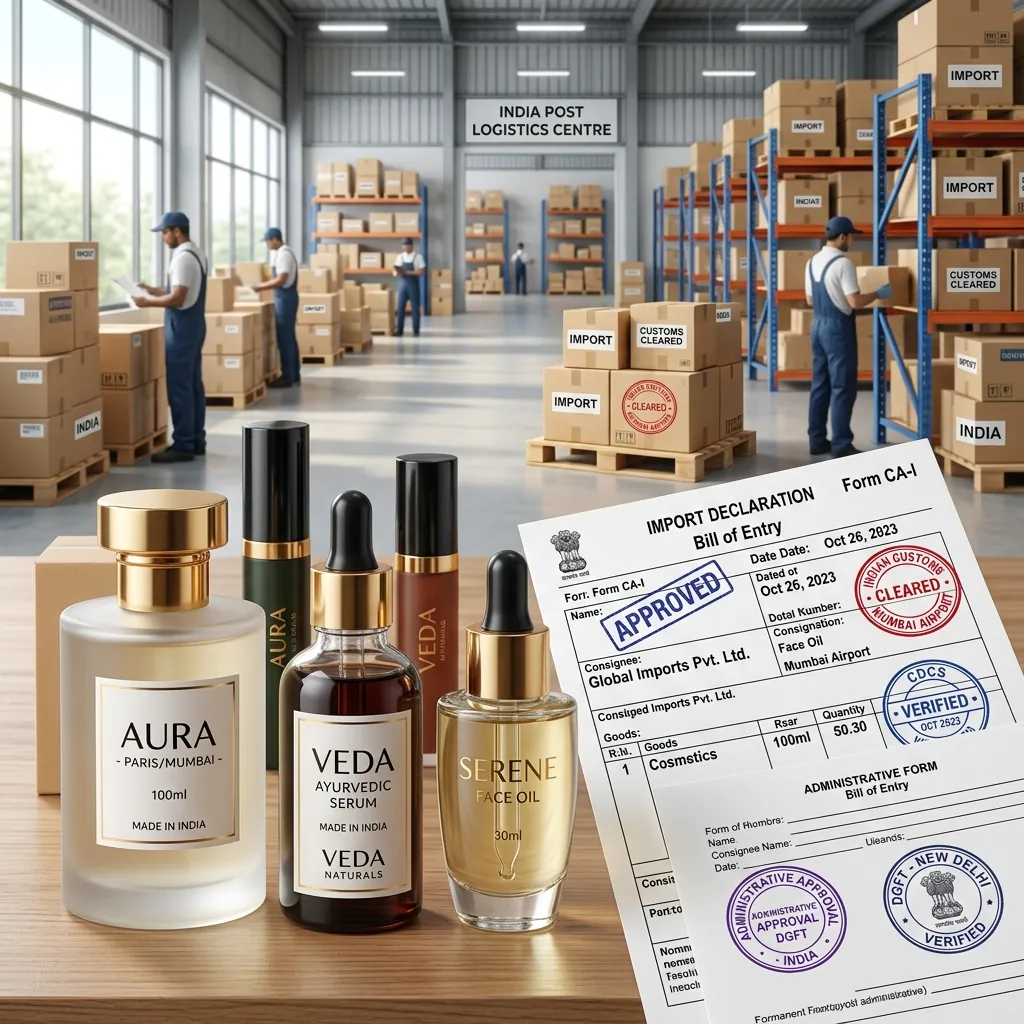
Cosmetic Import License
Import registration for foreign cosmetic products in India under CDSCO Cosmetics Rules 2020. We serve as the official representative for global cosmetic brands.
Service Overview
Importing cosmetic products into India requires an Import Registration Certificate issued by CDSCO under the Cosmetics Rules 2020. Each cosmetic product must be individually registered before it can be imported and sold in India.
The registration is product and manufacturer-specific. A single application can cover multiple shades or variants of the same product formulation. The Indian importer must apply on behalf of the foreign manufacturer.
MedRegX India provides complete cosmetic import registration services — acting as the technical liaison between foreign cosmetic brands and CDSCO, ensuring all documentation meets Indian regulatory requirements, and managing the complete registration lifecycle.
Key Takeaways
- Any cosmetic imported into India for sale needs a CDSCO import registration before the first commercial consignment.
- The registration is granted per brand and product range, and covers the variants declared in the application.
- A foreign brand works through an authorised Indian applicant/importer who holds the registration and answers to CDSCO.
- The dossier turns on formulation compliance, a Free Sale Certificate, safety and test data, and Schedule Q-ready labelling.
- Registration lasts for a defined period and must be renewed — and any formulation or label change may need updating.
How Cosmetic Import Registration Actually Works
Bringing a cosmetic brand into India is not a customs formality — it requires a registration from CDSCO obtained in advance of any commercial import. The registration is tied to the brand, the manufacturer and the specific products and variants being imported, and it must be held by an authorised Indian applicant who is legally responsible for the products in the market. For an overseas brand with no Indian entity, that means appointing a capable local representative; for an Indian importer, it means taking on genuine regulatory accountability, not just a trading role. Getting this structure right at the start prevents the most common cause of stalled imports: a consignment arriving before a valid registration is in place.
The registration application rests on a Free Sale Certificate from the country of origin — proof the product is legally sold there — together with the full formulation, safety and stability data, and evidence of manufacturing quality. A brand already selling in a well-regulated market usually has most of this, but not always in the form CDSCO expects. We bridge that gap, translating an existing international dossier into a compliant Indian application so the brand is not re-testing or re-documenting from scratch.
- Registration secured before the first commercial import consignment.
- Free Sale Certificate and manufacturer documentation compiled.
- Formulation screened against India's prohibited and restricted lists.
- Labelling brought in line with Schedule Q before shipment.
The Two Things That Stop Cosmetic Imports at the Border
Two issues detain more cosmetic consignments than any other: a non-compliant ingredient and a non-compliant label. India's prohibited and restricted substance lists do not always match those of the EU, US or other markets, so a formulation that is perfectly legal abroad can contain a colourant, preservative or restricted ingredient that is not permitted here — or is permitted only within a lower limit or with a mandatory warning. We screen every formulation against the Indian lists before import, so problems surface on paper rather than at the port.
Labelling is the second trap. Schedule Q requires specific declarations — ingredient list, importer and manufacturer details, the registration number, batch and manufacturing information, shelf life and any warnings — presented in a defined way. An imported product bearing only its home-market label will not clear. We review and correct artwork, and advise on the compliant over-labelling or re-labelling many brands need for their first shipments, so the registration you hold actually translates into product that reaches Indian shelves.
Required Documentation
"Accurate documentation is 70% of the battle. Our experts pre-audit every file before submission."
Our Delivery Workflow
Product Assessment
Review product formulation, ingredients, and claims for Indian regulatory compliance.
Document Collection
Gather all required documents from the foreign manufacturer and prepare the Indian application package.
CDSCO Application
File the import registration application with CDSCO and manage all correspondence and queries.
Import Clearance
Obtain registration certificate and provide ongoing support for customs clearance and compliance.
Frequently Asked Questions
Have questions? Find direct, humanized answers about the regulatory approvals and timelines.

Launch Your Product In Record Time
Red tape shouldn't decide your launch date. We keep the paperwork moving and the queries answered, so approvals come through sooner.