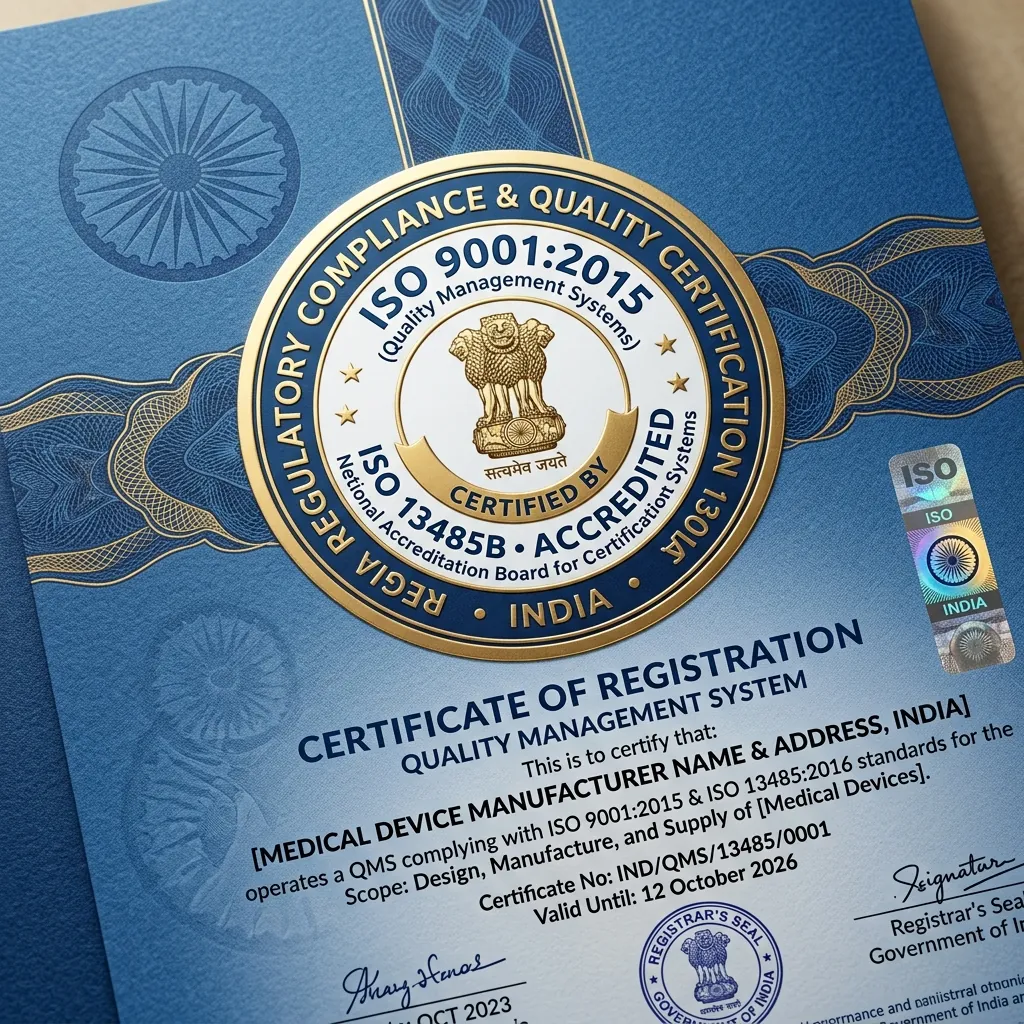
ISO Certification
ISO 9001, ISO 13485, ISO 14001, ISO 45001, and other ISO standard certification consulting to strengthen your quality management systems and meet global requirements.
Service Overview
ISO certification demonstrates that your organization meets internationally recognized standards for quality management, environmental management, occupational health and safety, or sector-specific requirements. ISO certification is increasingly required by customers, regulators, and export markets.
Key ISO standards relevant to MedRegX clients include: ISO 9001:2015 (Quality Management Systems), ISO 13485:2016 (Medical Devices QMS), ISO 14001:2015 (Environmental Management), ISO 45001:2018 (Occupational Health & Safety), ISO 22000:2018 (Food Safety Management), and ISO 22716:2007 (Cosmetics GMP).
MedRegX India provides comprehensive ISO certification consulting — from gap analysis and QMS implementation to pre-audit preparation, certification audit support, and ongoing surveillance audit management through our network of accredited certification bodies.
Key Takeaways
- ISO certification proves your management system meets an international standard — ISO 9001 (quality), ISO 13485 (medical devices), ISO 14001 (environment) and others.
- It is frequently demanded by buyers and tenders, and is often a practical precondition for CE marking, BIS and CDSCO approvals.
- Certification is earned through a real management system — documented processes, records, internal audits — not just paperwork bought off the shelf.
- A certification body audits in two stages (Stage 1 documentation review, Stage 2 on-site), and the certificate must come from an accredited body to carry weight.
- Certificates run in three-year cycles with annual surveillance audits — the system has to keep working, not just pass once.
Choosing the Right Standard — and Making It Real
ISO is a family of standards, and the first step is matching the right one to your business. ISO 9001 sets the baseline for a quality management system and applies almost universally. Medical-device manufacturers need ISO 13485, which is stricter on risk management, traceability and regulatory alignment and is effectively assumed behind a CDSCO or CE medical-device file. ISO 14001 addresses environmental management, and there are sector and topic-specific standards beyond these. Certifying to the wrong standard, or to more than you need, wastes effort — so we scope the requirement against what your customers, tenders and regulators actually ask for.
A certificate only has value if the system behind it is genuine. Auditors — and the buyers who rely on the certificate — are looking for a management system that is actually operated: documented processes that match how work is really done, records that demonstrate it, internal audits that find and fix problems, and management that reviews performance. We help build that system to fit your organisation rather than bolting on generic paperwork, because a system designed around your real operations is both easier to pass and genuinely useful to run.
- ISO 9001 — general quality management, applicable to almost any organisation.
- ISO 13485 — medical-device quality, expected behind CDSCO / CE filings.
- ISO 14001 — environmental management systems.
- Documented processes, records, internal audits and management review.
The Audit Path and Keeping the Certificate Live
Certification follows a defined route. After the management system is implemented and internal audits have been run, an accredited certification body conducts a Stage 1 audit that reviews the documentation and readiness, followed by a Stage 2 on-site audit that tests whether the system is actually working. Any non-conformities raised must be addressed before the certificate is issued. Crucially, the certificate should come from a body accredited under a recognised scheme — an unaccredited certificate can be worthless to a serious buyer or regulator. We prepare you for both stages, run mock audits, and help close findings quickly so certification is not delayed.
The certificate is valid for three years, but it is not a one-time achievement. Surveillance audits are conducted each year to confirm the system is still operating, and a full recertification audit occurs at the end of the cycle. A system that is set up for the initial audit and then abandoned will fail surveillance and can lose its certificate. We support the ongoing obligations — internal audits, management reviews, corrective actions and surveillance preparation — so the certification remains live and continues to open the doors, tenders and export markets it was obtained for.
Required Documentation
"Accurate documentation is 70% of the battle. Our experts pre-audit every file before submission."
Our Delivery Workflow
Gap Analysis
Assess your current QMS / processes against the applicable ISO standard requirements and identify improvement areas.
Documentation
Develop / update quality manuals, procedures, work instructions, and records to meet ISO requirements.
Training & Implementation
Train staff on ISO requirements, implement new processes, and run internal audits to verify effectiveness.
Certification Audit
Support the external certification audit by an accredited certification body and obtain your ISO certificate.
Frequently Asked Questions
Have questions? Find direct, humanized answers about the regulatory approvals and timelines.

Launch Your Product In Record Time
Red tape shouldn't decide your launch date. We keep the paperwork moving and the queries answered, so approvals come through sooner.