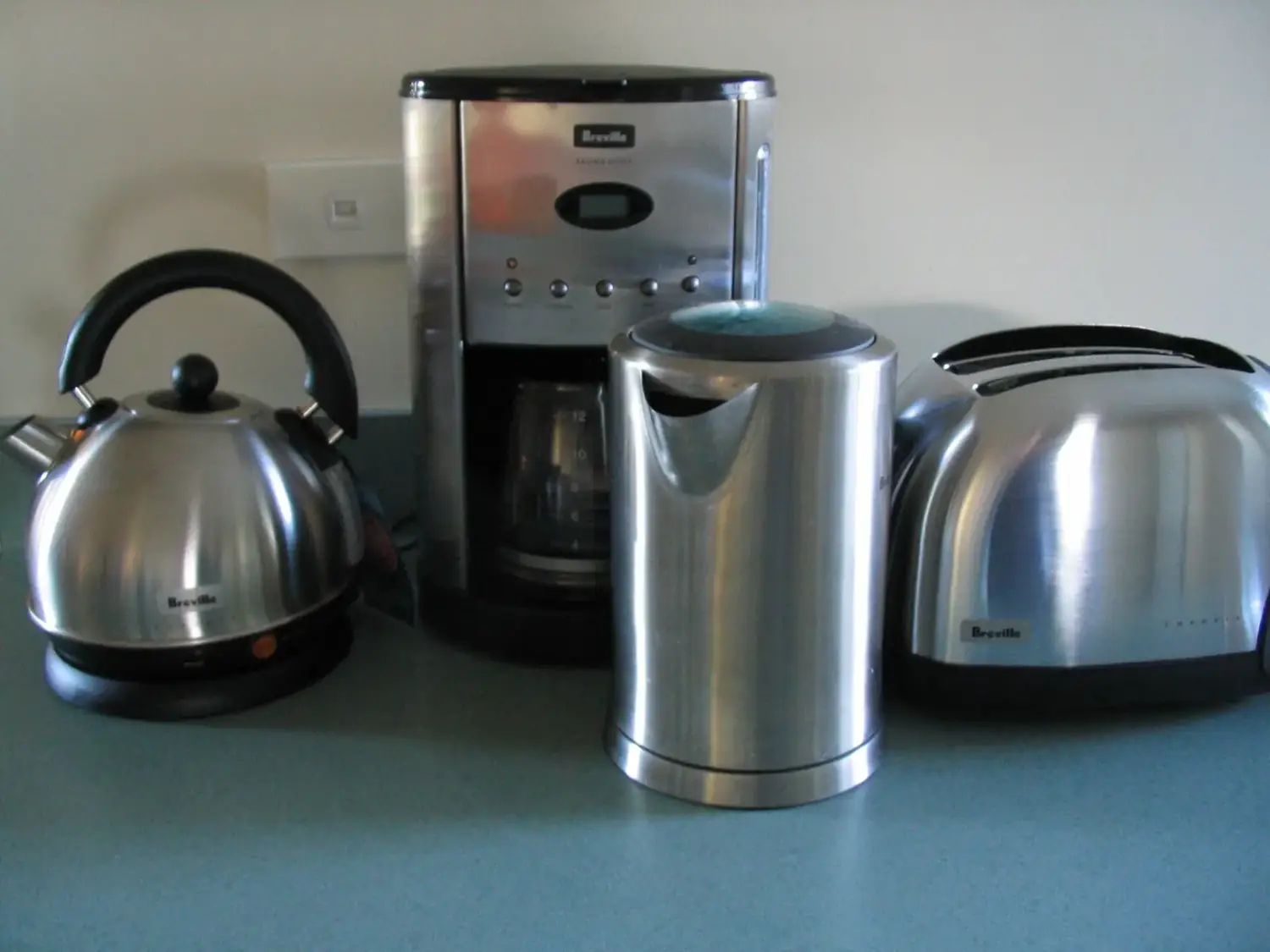
BIS Certification for Home Appliances
ISI certification for household electrical appliances — mixers, fans, water heaters, irons and more — against the safety standards India requires, for domestic manufacturers and importers alike.
Service Overview
Household electrical appliances are among the most established categories under India’s mandatory certification regime, and for good reason — a faulty appliance in a home is a direct electrical-safety and fire risk. Mixers and grinders, fans, water heaters, electric irons, room heaters and a wide range of other domestic appliances require BIS ISI certification against the applicable safety standards, and covered products cannot legally be manufactured, imported or sold without the mark. For anyone making or bringing home appliances into India, certification is simply the entry ticket.
Appliance certification is granted under the ISI scheme against the safety standards for household electrical appliances, anchored by the general safety standard for such appliances and the specific standards for particular appliance types. These standards are fundamentally about protecting the user: guarding against electric shock, excessive temperatures, mechanical hazards and fire, under normal use and foreseeable misuse. The whole certification turns on demonstrating that your appliance is safe by these measures and that your production keeps it that way.
The testing that underpins appliance certification is safety testing, and it is rigorous. Appliances are subjected to a battery of checks — insulation and dielectric strength, earthing, temperature rise under operation, protection against access to live parts, mechanical strength, endurance, and abnormal-operation tests that confirm the appliance fails safe rather than dangerously. An appliance that works perfectly in normal use can still fail these safety tests, and that failure points to a design or component issue that has to be resolved.
Both domestic manufacturers and importers are squarely in scope, and the route differs accordingly. An Indian appliance manufacturer certifies under the domestic ISI route with a factory inspection; a foreign appliance maker — and a great many appliances are imported — certifies through FMCS, with an Authorized Indian Representative and an overseas factory audit. Either way, the safety standard the appliance must meet is the same; it is the certification mechanism that varies with where the appliance is made.
Home-appliance certification frequently sits alongside other requirements for an electronics or appliance business — the same company may face this ISI certification for its appliances, CRS registration for electronic products, and other obligations. Managed together, these overlapping BIS requirements become one coherent compliance programme, which is how an appliance manufacturer with a varied range is best served rather than treating each product line’s certification as a separate exercise.
We guide appliance manufacturers and importers through BIS ISI certification — identifying the safety standard for each appliance, coordinating the safety testing, preparing the factory or arranging FMCS for foreign makers, and managing the application to licence — so your home appliances meet India’s safety requirements and carry the mark that lets them reach the market.
Key Takeaways
- Most household electrical appliances fall under mandatory BIS safety certification, split between CRS and ISI depending on the product.
- Certification is against the product-specific IS safety standard (for example IS 302 series), verified by lab testing.
- Selling an uncertified notified appliance online or offline invites seizure and penalty.
Why Appliance Safety Certification Is Strict
Household appliances live in the home, are handled by ordinary people including children, and run on mains electricity, which makes their safety a serious public concern. A poorly designed appliance can deliver an electric shock, overheat and start a fire, or injure a user mechanically, and because appliances are used in enormous numbers, a systematic safety flaw can cause widespread harm. This is precisely why India requires mandatory ISI certification for household electrical appliances — the certification exists to keep dangerous products out of homes.
For a manufacturer or importer, this means appliance certification is genuinely about safety, not paperwork, and the standards and testing are demanding accordingly. Understanding that the whole exercise is aimed at protecting the user helps frame it correctly: the goal is not to pass a test but to produce a genuinely safe appliance, of which the certificate is the evidence. We approach appliance certification in that spirit, helping you build safety into the product rather than chase a mark for an unsafe one, which is also the only reliable way to pass.
- Appliances are mains-powered and handled by ordinary users.
- Poor design risks shock, fire and mechanical injury.
- Mandatory certification exists to keep unsafe appliances out of homes.
The Safety Standards for Appliances
Household electrical appliances are certified against safety standards structured around a general standard for the safety of household and similar electrical appliances, supplemented by particular standards for specific appliance types — a mixer grinder, a water heater, a fan, an electric iron each have their applicable particular requirements layered on the general safety base. Identifying the right combination of standards for your specific appliance is the foundation of certification, as it defines exactly what safety requirements the product must meet.
We map each of your appliances to its applicable safety standards, so every product is certified against the correct requirements, and we help you understand what those requirements mean in practical design terms — the clearances, the insulation, the temperature limits, the protective measures. Because the standards are detailed and safety-critical, this understanding lets us assess whether an appliance is likely to meet its standard before formal testing, heading off the discovery of a safety non-conformity at the test stage where it is expensive to fix.
Safety Testing in Depth
Appliance certification rests on comprehensive safety testing carried out in a recognised laboratory. The tests probe every way an appliance might endanger a user: dielectric and insulation tests confirm it will not become live; earthing and access tests confirm protection against electric shock; temperature-rise tests confirm surfaces and internals stay within safe limits during operation; mechanical strength and endurance tests confirm it withstands normal handling and prolonged use; and abnormal-operation tests confirm that when something goes wrong — a blocked motor, a fault — the appliance fails safely rather than dangerously.
We coordinate this testing and, importantly, help you understand what it entails so appliances are designed and built to pass rather than submitted and found wanting. A frequent and expensive surprise is an appliance that functions perfectly but fails a safety test — an inadequate clearance, an over-temperature under fault, a component not rated for the duty — because it was designed for cost and function without full regard to the safety standard. Assessing designs against the tests early is how we help avoid that, and it also produces a genuinely safer product.
- Insulation, earthing and shock-protection tests.
- Temperature-rise and endurance testing under operation.
- Abnormal-operation tests confirming the appliance fails safe.
Domestic Manufacturers: The ISI Route
An appliance manufacturer based in India certifies through the domestic ISI route: identify the standard, have the appliance safety-tested, undergo a BIS factory inspection of the manufacturing and quality control, and obtain a licence to use the ISI mark. For appliances, the factory inspection naturally attends to the aspects that bear on safety and consistency — the assembly process, the incoming inspection of safety-critical components, the in-process and final testing, and the quality records — because a safe appliance depends on every unit being built to the same safe design.
We prepare domestic appliance makers for this route, readying the factory and the quality-control system, particularly around the handling and testing of safety-critical components and the routine safety checks a compliant appliance operation should perform. Because appliance safety hinges on consistent production — a safe design built inconsistently is not safe — the inspection’s focus on ongoing control is well founded, and we help you demonstrate that control genuinely rather than as a one-off for the auditor.
Foreign Manufacturers: FMCS for Appliances
A large proportion of household appliances sold in India are imported, and a foreign appliance manufacturer certifies through FMCS — the Foreign Manufacturers Certification Scheme — with its Authorized Indian Representative and its overseas factory audit. The appliance must meet the same Indian safety standards as a domestically made one; the difference is that BIS travels to the overseas plant to audit it, at the manufacturer’s cost, and the AIR handles the Indian side of the process. For imported appliances under mandatory certification, FMCS is the only route to the ISI mark.
We handle FMCS for foreign appliance makers, arranging the AIR, preparing the overseas factory thoroughly for the BIS audit, and coordinating the testing and application. Because the FMCS audit is costly and its scheduling significant, and because an appliance also has to clear demanding safety testing, thorough preparation on both fronts is what keeps the process efficient. For an overseas appliance brand, getting FMCS right is the difference between a smooth entry to the large Indian appliance market and an expensive, drawn-out one.
Marking, Surveillance and Renewal
Once the licence is granted, the appliance may bear the ISI mark, and using the mark correctly — the right form, the licence number, the required declarations — is part of compliance. Thereafter the licence is maintained through BIS surveillance, which for a safety-critical product like an appliance includes market samples being drawn and safety-tested, and it must be renewed. An appliance maker who lets quality or component control slip after certification risks surveillance samples failing safety tests, which can suspend or cancel the licence.
We guide correct use of the mark and help both domestic and foreign appliance makers sustain the quality and component discipline that keep surveillance uneventful, and we manage renewals so the licence stays valid. For an appliance business whose market access depends on the mark — and whose reputation depends on genuinely safe products — protecting the certification through consistent, safety-focused production is essential. We treat appliance certification as an ongoing safety commitment, not just a licence obtained and forgotten.
How Common Appliances Are Covered
| Appliance | Route | Basis |
|---|---|---|
| Mixers, irons, kettles | ISI / CRS | IS 302 safety series |
| Adapters, chargers | CRS | Self-declaration + testing |
| LED lighting | CRS | IS 10322 / safety IS |
Required Documentation
"Accurate documentation is 70% of the battle. Our experts pre-audit every file before submission."
Our Delivery Workflow
Standards
We identify the general and particular safety standards for each appliance.
Design & Test
We assess designs against the safety requirements and coordinate the safety testing.
Route
We prepare the factory for the ISI inspection, or arrange FMCS for foreign makers.
Application to Licence
We manage the BIS application to licence and support marking, surveillance and renewal.
Frequently Asked Questions
Have questions? Find direct, humanized answers about the regulatory approvals and timelines.

Launch Your Product In Record Time
Red tape shouldn't decide your launch date. We keep the paperwork moving and the queries answered, so approvals come through sooner.