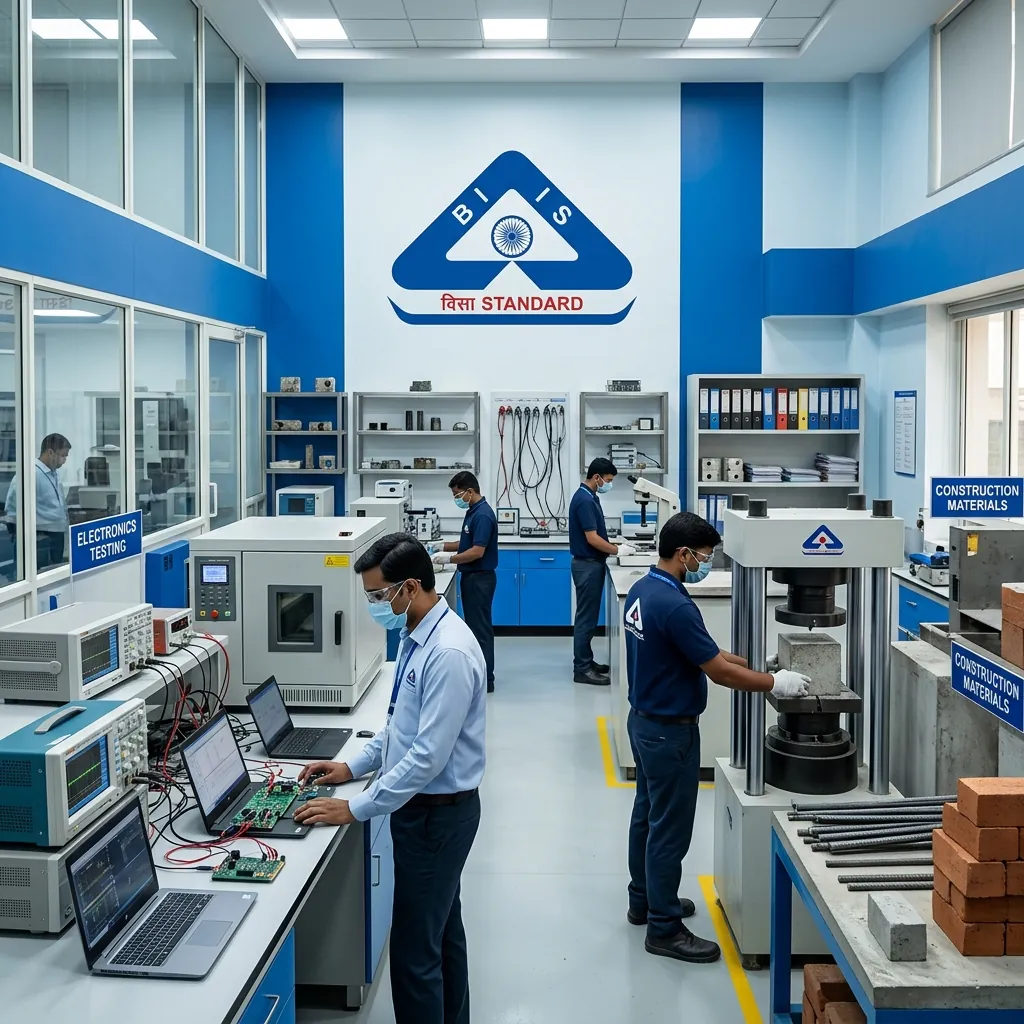
BIS Scheme X Certification
The newer BIS route for machinery and electrical equipment safety — Scheme X certification under the Omnibus Technical Regulation, covering type approval and unit certification for a fast-expanding list of industrial products.
Service Overview
Scheme X is one of the more significant recent developments in Indian product regulation, and it is catching a lot of manufacturers by surprise. Introduced under what is commonly called the Omnibus Technical Regulation for machinery and electrical equipment safety, Scheme X brings a broad range of industrial machinery and electrical equipment under BIS certification — categories that were, in many cases, previously outside mandatory certification altogether. For makers and importers of industrial equipment, it represents a genuinely new compliance obligation to understand and plan for.
The scope is the striking thing. Rather than a narrow product list, the Omnibus Technical Regulation reaches across machinery and electrical equipment broadly, which means many manufacturers who never had to think about BIS certification for their industrial products now do. Establishing whether your specific machinery or equipment falls under Scheme X, and by when, is the essential first step, because the regulation has phased applicability and the answer determines whether this is an immediate requirement or one on the horizon.
Scheme X is structured differently from the older schemes, offering routes suited to industrial equipment. In broad terms it provides for type approval — certifying a product type, backed by testing and an assessment of the manufacturer — and for unit certification, suited to one-off or low-volume industrial machinery where certifying individual units makes more sense than a production licence. Choosing the appropriate route for your product and production model is part of navigating the scheme sensibly.
As a newer scheme, Scheme X is still bedding in, and its detailed requirements, timelines and the readiness of testing and certification infrastructure are evolving. That makes current, informed guidance particularly valuable: advice based on an older understanding, or on how the established schemes work, can mislead. Understanding where Scheme X actually stands — what is required now, what is phased in later, and how the process is running in practice — is central to handling it well.
For many industrial manufacturers, Scheme X will sit alongside other obligations. The same company may face Scheme X for its machinery, BIS ISI or FMCS for other products, and further requirements besides, and coordinating these into one coherent compliance plan avoids duplicated effort and conflicting timelines. We approach Scheme X as part of a manufacturer’s whole India regulatory picture rather than an isolated new hurdle.
We help manufacturers and importers navigate BIS Scheme X — determining coverage and applicability, selecting the right certification route, coordinating testing and assessment, and managing the application through to certification — so a new and still-evolving obligation for machinery and electrical equipment is met deliberately rather than scrambled for at the last moment.
Key Takeaways
- Scheme X, introduced under the 2021 amendment, brings machinery and electrical equipment under a unified BIS certification route.
- It splits into Type 1 (unit verification) and Type 2 (ongoing licence), so the right sub-route depends on your production model.
- It is steadily replacing scattered older approvals for industrial equipment, so early alignment avoids rework.
A New and Broad Obligation
Scheme X arrived as part of a deliberate move to bring machinery and electrical equipment safety under BIS certification through the Omnibus Technical Regulation, and its significance lies in its breadth. Where earlier schemes targeted specific product lists, this regulation reaches across a wide swathe of industrial machinery and electrical equipment, sweeping in categories that many manufacturers had never needed to certify. For a great deal of industrial equipment sold in or imported into India, Scheme X converts an area of previously light regulation into a mandatory certification requirement.
That breadth is exactly why the scheme is catching people out. A manufacturer of industrial machinery who has operated for years without any BIS involvement can suddenly find their product within scope, with a compliance deadline attached. The essential first task, therefore, is a clear-eyed assessment of whether and when your product is covered — because for equipment that falls under the regulation, Scheme X is not optional, and the lead time to obtain certification has to be planned against the applicability dates.
- Scheme X covers machinery and electrical equipment broadly.
- It brings in categories previously outside mandatory certification.
- Many manufacturers are newly in scope — coverage must be checked.
Working Out Coverage and Timing
Because the Omnibus Technical Regulation is broad and its applicability is phased, the two questions that matter most at the outset are whether your product is covered and by when. The regulation does not switch on for everything at once; different categories come under mandatory certification on different dates, so a product might be in scope but with a deadline that gives you time to prepare, or one that is already pressing. Getting this timing right is the difference between a planned certification and a last-minute scramble that risks a gap in your ability to sell.
We assess your specific machinery or electrical equipment against the regulation to establish coverage and the applicable timeline, so you know exactly where you stand and can plan accordingly. This mapping is genuinely valuable for a broad, phased regulation, because the alternative — assuming you are either safe or already caught without checking — leads either to unnecessary alarm or to a compliance deadline arriving unprepared. Clarity on coverage and timing is the foundation everything else builds on.
Choosing the Right Certification Route
Scheme X is structured to suit the realities of industrial equipment, which differ from mass-produced consumer goods. It broadly provides a type-approval route — certifying a product type on the basis of testing and an assessment of the manufacturer’s capability, appropriate for equipment made in series — and a unit-certification route, which certifies individual units and suits one-off, custom or low-volume industrial machinery where a full production licence would not fit the production model. Selecting the route that matches your product and how you make it is an early, consequential decision.
We help you choose the appropriate route based on your equipment and production. For a manufacturer producing standard machinery in quantity, type approval is usually the sensible path; for one building large custom machines to order, unit certification may fit far better. Getting this choice right shapes the whole certification effort — the testing, the assessment, the cost and the timeline — so we treat it as a deliberate decision informed by how your business actually operates rather than a default.
Testing and Manufacturer Assessment
Whichever route applies, Scheme X rests on demonstrating that the equipment meets the applicable safety standards, which means testing against those standards, and — for the type-approval route — an assessment of the manufacturer’s capability to produce conforming equipment consistently. The specifics of what testing is required, where it can be done, and how the manufacturer assessment is conducted are part of the scheme’s detail, and for a newer scheme the testing infrastructure and procedures are still maturing, which can itself affect timelines.
We coordinate the testing and prepare you for any manufacturer assessment, working with the current state of the scheme’s infrastructure. Because Scheme X is evolving, part of the value is simply knowing how the testing and assessment are actually being handled in practice at any given time, rather than relying on how the older schemes work or on early assumptions. We keep the technical process aligned with what BIS currently requires, so the certification effort is aimed accurately.
- Equipment is tested against the applicable safety standards.
- Type approval also involves a manufacturer capability assessment.
- Testing infrastructure for the scheme is still maturing.
Managing an Evolving Scheme
The single most important thing about Scheme X right now is that it is new and still settling. Its detailed requirements, its timelines, the readiness of recognised testing capacity, and the practical experience of how BIS is administering it are all evolving, which means guidance can go stale quickly and assumptions carried over from the established schemes can mislead. For a manufacturer, this creates real uncertainty — and real risk of preparing for the wrong thing or missing a shifting deadline.
We keep close to how Scheme X is actually developing, so the advice we give reflects the current state rather than an outdated snapshot or a guess based on other schemes. Managing an evolving regulation well is partly a matter of current knowledge and partly of flexibility — being ready to adjust as requirements and timelines firm up. We provide that current, adaptive guidance, so you are neither preparing against obsolete information nor caught out by a change in how the scheme is being applied.
Scheme X Within Your India Compliance Plan
For most industrial manufacturers, Scheme X is one obligation among several. The same business may face Scheme X for its machinery, other BIS schemes for other products, and further requirements around electronics, environment or metrology depending on what it makes. Treated as isolated, each becomes its own project with its own timeline; treated together, they can be coordinated into one India compliance plan that shares documentation, representative arrangements and effort where possible.
We approach Scheme X as part of that whole picture, so it is integrated with your other Indian obligations rather than bolted on separately. For a manufacturer newly grappling with Indian product regulation because Scheme X has brought them into scope, this coordinated approach is often a relief — one partner holding the whole compliance thread, making sure the various requirements fit together and no deadline is missed, rather than a scramble across several unfamiliar schemes at once.
Required Documentation
"Accurate documentation is 70% of the battle. Our experts pre-audit every file before submission."
Our Delivery Workflow
Coverage & Timing
We assess whether and when your equipment falls under the Omnibus Technical Regulation.
Choose the Route
We select type approval or unit certification to fit your product and production.
Test & Assess
We coordinate testing against the safety standards and any manufacturer assessment.
Apply to Certificate
We manage the Scheme X application and BIS liaison through to certification.
Frequently Asked Questions
Have questions? Find direct, humanized answers about the regulatory approvals and timelines.

Launch Your Product In Record Time
Red tape shouldn't decide your launch date. We keep the paperwork moving and the queries answered, so approvals come through sooner.