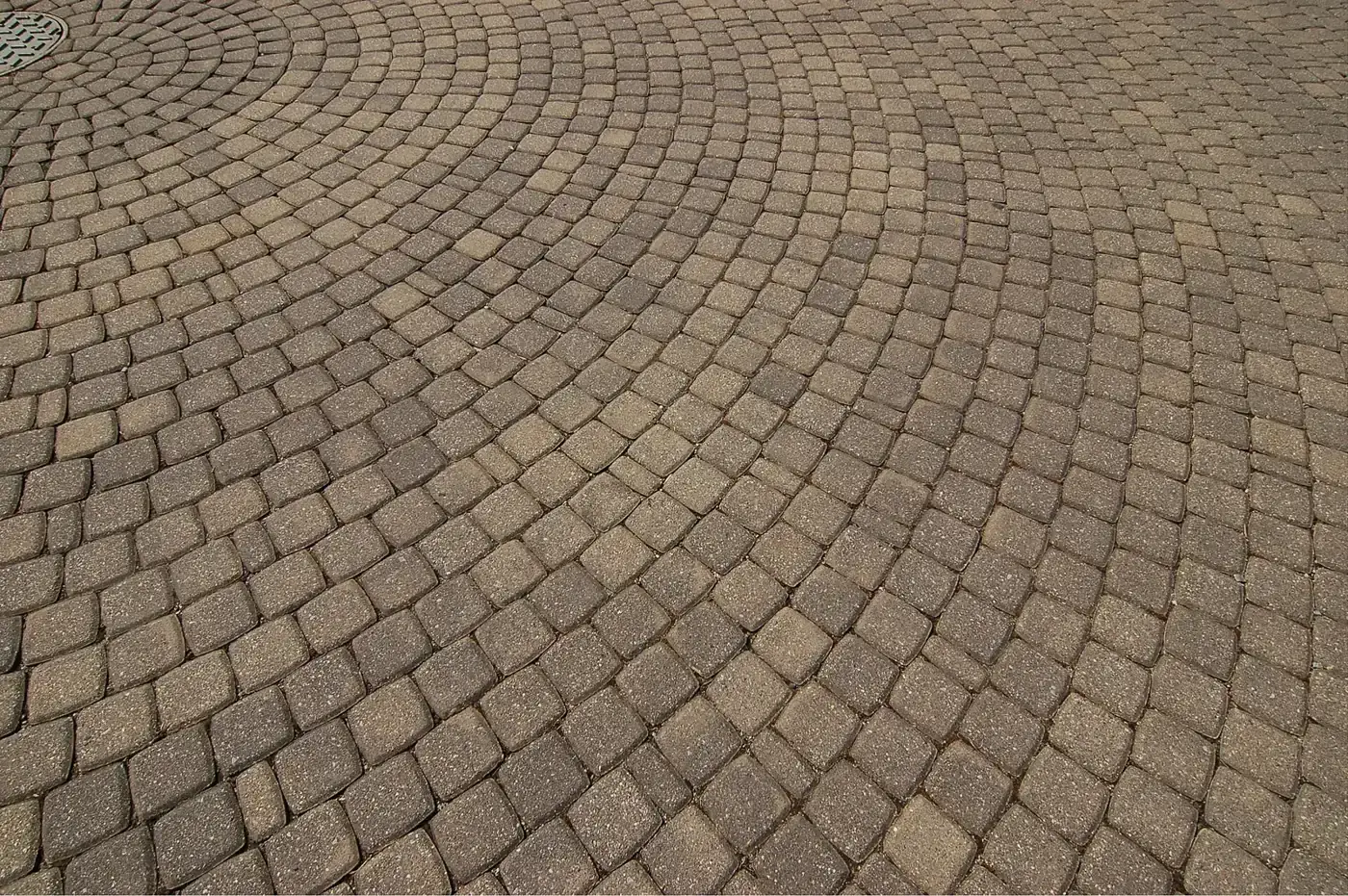
BIS Certification for Paver Blocks
ISI certification for concrete paver blocks under IS 15658 — testing, in-house lab readiness, factory inspection and licence, so your precast paving carries the mark contractors and government tenders demand.
Service Overview
Concrete paver blocks — the interlocking precast units that surface footpaths, parking areas, plazas and roads across India — fall under BIS certification, and for a paving-block manufacturer the ISI mark is often the key that unlocks the market that matters. Government tenders, municipal projects and serious contractors increasingly demand ISI-certified paver blocks, and for many buyers an uncertified block simply does not qualify. Whether or not it is strictly mandatory for a given application, the mark is frequently the practical requirement for winning the work worth having.
Paver block certification is granted under the ISI scheme against the specific Indian Standard for the product, IS 15658, which covers precast concrete blocks for paving. That standard sets out exactly what a compliant paver block must be — its dimensions and tolerances, its strength, its durability and its performance — and the whole certification turns on demonstrating that your blocks meet it and that your plant can keep making them that way. It is a product with well-defined, testable requirements, which makes the path clear but the discipline real.
The defining technical requirement for paver blocks is strength, and compressive strength testing is at the centre of the certification. IS 15658 specifies grades of paver block by their strength, matched to the intensity of traffic they must bear — light footpath duty through to heavy vehicular loading — and your blocks have to achieve the strength for the grade you claim. A block that falls short on strength is the classic paver-block certification failure, and it points straight back to the mix design and the manufacturing process.
As with any ISI certification, the process combines testing with a factory inspection, and for paver blocks the in-house testing facility is a particular focus. The standard and the scheme expect a manufacturer to be able to test its own production — compressive strength above all — so having the right testing equipment and the capability to use it is something the BIS inspection will look for. A paver-block plant that cannot test its own strength is a plant that cannot demonstrate ongoing control, which the inspection is designed to verify.
Paver-block certification often sits within a broader construction-materials compliance picture — a manufacturer may make paver blocks, concrete products, and other building materials, several of which carry their own BIS requirements. Handled by a team familiar with the construction-products landscape, the paver-block licence is obtained as part of a coherent approach rather than in isolation, which helps where a plant produces multiple certifiable products.
We guide paver-block manufacturers through ISI certification under IS 15658 — mix and product readiness against the standard, compressive-strength and other testing, setting up the in-house testing capability, preparing the factory for inspection, and managing the BIS application to licence — so your paver blocks earn the mark that opens tenders and serious projects.
Key Takeaways
- Concrete paver blocks are certified against IS 15658, covering strength, abrasion and dimensional tolerance.
- Certification is granted per plant after in-house lab verification and BIS sample testing.
- A working factory testing setup is effectively a precondition, since IS 15658 demands routine strength checks.
Who Needs This
Why the ISI Mark Matters for Paver Blocks
The market for paver blocks is dominated by projects — municipal paving, government infrastructure, commercial developments, serious contractors — and these buyers increasingly insist on ISI-certified blocks. Government tenders in particular frequently specify BIS certification as a qualifying condition, which means an uncertified manufacturer is shut out of a large and stable part of the market regardless of the quality of their product. For a paver-block business with ambitions beyond small local supply, the ISI mark is less a badge than a ticket to the tender table.
Beyond tenders, the mark carries genuine commercial weight because paver blocks are a product where quality is not obvious to the eye but matters enormously in service. A block that looks fine but is under-strength fails under traffic, and buyers know it, so the ISI mark provides the assurance that lets a contractor specify your blocks with confidence. We help paving manufacturers understand exactly where certification unlocks value for their business, so the effort is tied to a clear commercial return rather than pursued for its own sake.
- Government tenders often require ISI-certified paver blocks.
- Serious contractors and municipal projects demand the mark.
- For paving, certification is frequently the ticket to the real market.
IS 15658 and What It Requires
Certification for paver blocks is against IS 15658, the Indian Standard for precast concrete blocks for paving. The standard defines the product comprehensively: the dimensions and permitted tolerances, the compressive strength by grade, the requirements for water absorption and abrasion resistance that govern durability, and the shape and finish requirements. It is a thorough specification, and certification means demonstrating that your blocks meet all of it, not just the headline strength figure.
We help paver-block manufacturers understand IS 15658 in practical terms — what each requirement means for their mix design, their moulds and their process — so the product is engineered to meet the standard rather than tested and found wanting. Because the standard covers durability and dimensional accuracy as well as strength, a block can pass on strength and still fall short elsewhere, so we make sure the product is assessed against the whole specification before formal testing rather than against strength alone.
Compressive Strength and Grades
Strength is the heart of a paver block, and IS 15658 grades blocks by their compressive strength, tied to the traffic they are intended to bear — lighter grades for pedestrian footpaths, progressively higher grades for parking, light vehicular and heavy vehicular use. You certify your block for a grade, and it must reliably achieve the compressive strength that grade requires. Claiming a grade your blocks cannot consistently meet is the surest route to a failed certification and, worse, to product that fails in service.
We help you match the grade you certify to what your process can genuinely and consistently produce, and to the applications you are targeting, so the claim is both honest and commercially sensible. Where the blocks fall short of the intended grade, that is a mix-design and process question to resolve before formal testing — adjusting the mix, the compaction, the curing — rather than a paperwork problem. Getting the strength right, reliably, is the core engineering task behind a paver-block certification.
- IS 15658 grades paver blocks by compressive strength.
- Grades map to traffic — footpath through to heavy vehicular.
- Certify the grade your process can consistently achieve.
The In-House Testing Facility
For paver blocks, a particular focus of certification is the manufacturer’s own testing capability. The scheme expects a producer to be able to test its production — compressive strength above all, and typically the other key parameters — so that quality is controlled continuously rather than only when BIS samples. This means having the right testing equipment, notably a compression testing machine of adequate capacity, and the capability to use it correctly, and the factory inspection will specifically look for this in-house capability.
We advise paver-block manufacturers on the in-house testing facility they need and help ensure it is in place and properly used before the inspection, because a plant that cannot test its own strength cannot demonstrate the ongoing control the licence assumes. Setting this up is a real, sometimes underestimated part of paver-block certification — the equipment is a genuine investment — but it is also what turns quality from a hope into a controlled, evidenced process, which benefits the business well beyond the certificate.
Factory Inspection and the Licence
As with all ISI certification, a BIS officer inspects the paver-block plant to verify that the manufacturing process, the raw material control, the in-house testing and the quality management are capable of consistently producing conforming blocks. For paver blocks the inspection naturally focuses on the aspects that determine strength and durability — the mix, the compaction and curing, and the testing capability — and on whether the quality records show genuine, ongoing control rather than a one-off effort for the auditor.
We prepare the plant and the quality system for this inspection and manage the BIS application through to the grant of the ISI licence, coordinating the sequence of testing and inspection and responding to any BIS queries. Because we ready the product, the testing capability and the factory in advance, the inspection tends to go smoothly and the licence to follow without avoidable delay — the tangible outcome being the right to apply the ISI mark that the tenders and contractors are looking for.
Keeping the Licence Through Surveillance
A paver-block ISI licence is a continuing commitment, maintained through BIS surveillance — periodic checks, including market samples tested for strength and conformity, and factory verification — and it must be renewed. Because paver-block quality depends directly on maintaining the mix and the process, a manufacturer who lets standards slip after certification risks surveillance samples failing on strength, which can suspend or cancel the licence and, with it, access to the certified market. The mark has to be earned continuously, not just once.
We help paver-block manufacturers sustain the mix discipline, the in-house testing and the records that keep surveillance uneventful, and we manage renewals so the licence stays valid. For a paving business whose tender eligibility rests on the ISI mark, protecting that certification through consistent production is as important as obtaining it — a surveillance failure is a self-inflicted and costly loss of market access. We treat the licence as the durable commercial asset it is for a serious paver-block manufacturer.
Required Documentation
"Accurate documentation is 70% of the battle. Our experts pre-audit every file before submission."
Our Delivery Workflow
Standard & Grade
We assess your blocks against IS 15658 and match the grade to your process and applications.
Testing
We coordinate compressive-strength, durability and other testing against the standard.
In-House Lab & Factory
We ready your in-house testing capability and factory for the BIS inspection.
Application to Licence
We manage the BIS application and liaison through to your ISI licence.
Frequently Asked Questions
Have questions? Find direct, humanized answers about the regulatory approvals and timelines.

Launch Your Product In Record Time
Red tape shouldn't decide your launch date. We keep the paperwork moving and the queries answered, so approvals come through sooner.