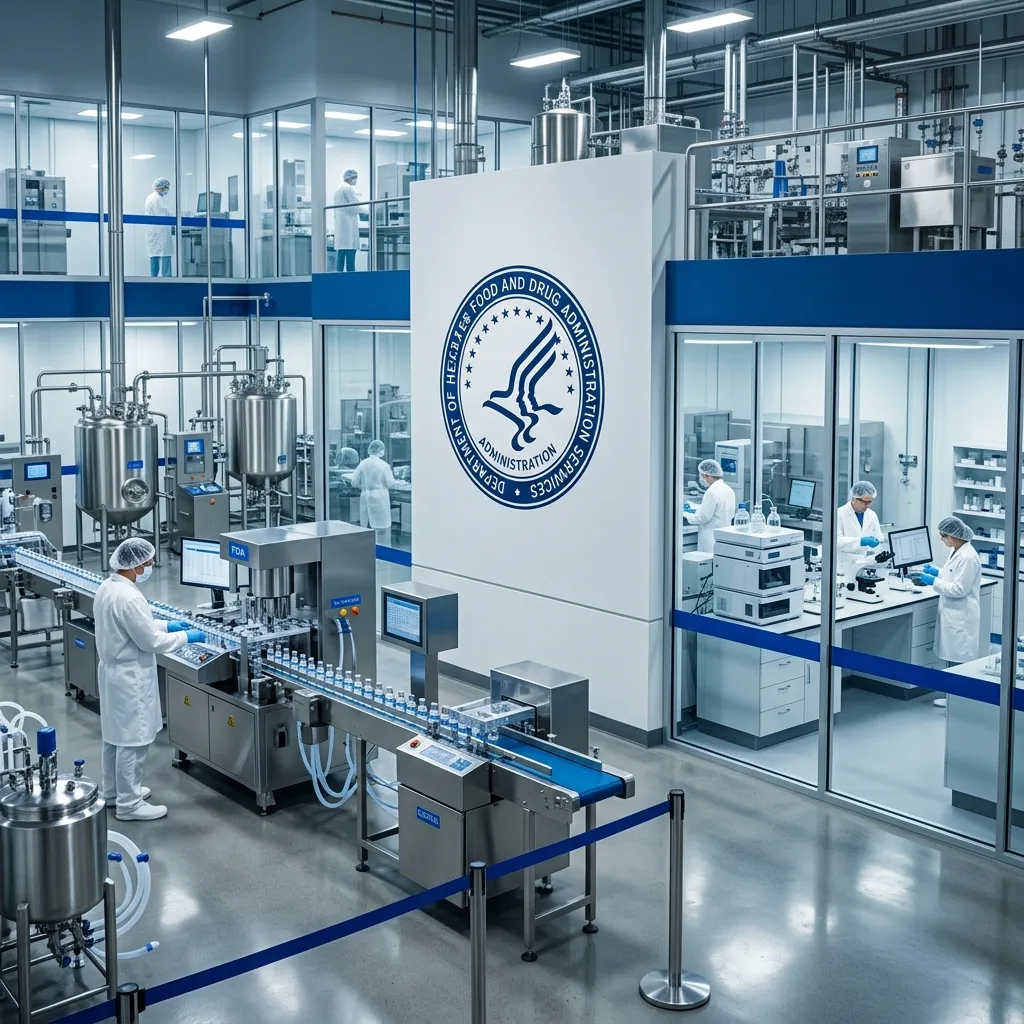
FDA 21 CFR Part 820 Quality System
Build a quality system that stands up to an FDA inspection — 21 CFR Part 820 (QSR) implementation and its convergence with ISO 13485 under QMSR, so your US-facing operation passes the day the investigator arrives.
Service Overview
If you sell a medical device in the United States, your quality system has to satisfy the FDA, and the FDA’s benchmark is 21 CFR Part 820 — the Quality System Regulation, usually just called the QSR. It sets out what the FDA expects of a device manufacturer’s quality system, and, unlike a certificate you earn from a registrar, compliance is proven when an FDA investigator walks your site and inspects it. There is no certificate to wave; there is only a system that holds, or does not, on the day.
That inspection-driven reality shapes everything. An FDA investigator does not review a file you submitted; they arrive, often with limited notice, and test whether your quality system actually works by following records, tracing complaints, and probing design and CAPA. A system built to look good on paper but not lived on the floor is exactly what an inspection exposes, and the consequences — a Form 483, or worse a warning letter — are public and commercially damaging.
The landscape is also changing in a way that works in most manufacturers’ favour. The FDA has moved to harmonise the QSR with ISO 13485 under the Quality Management System Regulation, the QMSR, aligning the US requirements much more closely with the international standard. For companies already running a solid ISO 13485 system, this convergence means the US quality requirements are far less of a separate mountain than they used to be — but the FDA’s inspection culture and certain US-specific expectations remain.
The core of Part 820 will be familiar to anyone who knows ISO 13485: design controls, document and record control, purchasing controls, production and process controls, CAPA, and complaint handling. But the US has its own emphases and its own record vocabulary — the Device Master Record and the Device History Record chief among them — and its own inspection technique that a good system anticipates rather than merely surviving.
Because the QSR and ISO 13485 now converge, we build or extend one quality system that serves both the US and your other markets, rather than maintaining parallel systems for different regulators. The same foundation supports a CDSCO manufacturing licence audit and CE marking, so the investment pays off well beyond the United States.
We take you from a gap assessment against Part 820 and QMSR, through implementation of the design controls, records and CAPA the FDA expects, into genuine inspection readiness — mock FDA inspections, investigator-style record traces, and the discipline that turns an FDA visit from a crisis into a routine event.
Key Takeaways
- 21 CFR Part 820 is the US Quality System Regulation for medical device makers — enforced through FDA inspections.
- The FDA is harmonising it with ISO 13485 under the new QMSR, effective February 2026, so alignment now saves rework.
- Design controls and CAPA are the areas FDA investigators cite most often.
What the QSR Requires — and How QMSR Changes It
Part 820 sets out the quality-system requirements a US device manufacturer must meet: management responsibility, design controls, document and purchasing controls, identification and traceability, production and process controls, acceptance activities, non-conforming product handling, CAPA, labelling, records, and servicing. For years this ran in parallel to ISO 13485 — similar in spirit, different in detail — forcing companies to satisfy both. The FDA’s move to the Quality Management System Regulation changes that, incorporating ISO 13485 by reference and harmonising the US requirements with the international standard.
For a manufacturer, the practical upshot is that a well-built ISO 13485 system now gets you most of the way to US compliance, with the remaining work being the US-specific overlays and, crucially, readiness for the FDA’s way of inspecting. We plan implementation around that convergence, so you build one system tuned for both rather than duplicating effort across two frameworks that are now, deliberately, close cousins.
- Part 820 covers design, production, records, CAPA and complaints.
- QMSR harmonises the US requirements with ISO 13485.
- A strong ISO 13485 system now carries much of the US burden.
Design Controls the FDA Way
Design controls are where FDA inspections most often bite, just as they are under ISO 13485 — but the FDA has decades of enforcement history here and a very particular sense of what good looks like. Investigators trace design inputs to outputs, check that verification and validation genuinely close the loop, look hard at design reviews, and expect a Design History File that tells the complete, contemporaneous story of how the device was developed. A design history assembled after the fact is one of the classic ways a company earns a 483.
We build design controls as a living, traceable process rather than a retrospective paperwork exercise, with the Design History File growing naturally as development proceeds. Done properly it satisfies both the FDA and ISO 13485 at once, and it has the side benefit of making your engineering more disciplined and your next device easier to develop.
The Records the FDA Wants: DMR and DHR
The US has its own record vocabulary, and two terms dominate. The Device Master Record is the recipe — the complete set of specifications and procedures that define how the device is made. The Device History Record is the evidence that a particular batch was actually made to that recipe. Together they let an investigator confirm that what you shipped matches what you designed, and gaps or inconsistencies between the two are prime inspection findings.
We structure the DMR and DHR so they are complete, consistent and easy to follow, and so they map cleanly onto your ISO 13485 documentation rather than duplicating it. When an investigator pulls a batch record and traces it back to the master record, the story should hold together without a scramble — and that only happens if the records were designed to hold together in the first place.
CAPA and Complaints in an Inspection Culture
If design controls are the first place an FDA investigator looks, CAPA is the second. The FDA cares intensely about whether you detect problems, investigate them properly, fix root causes rather than symptoms, and verify the fix worked — and whether your complaint handling feeds that system honestly. A CAPA system that opens issues but never closes them, or closes them without real root-cause analysis, is a red flag investigators are trained to find.
We build CAPA and complaint handling to withstand exactly that scrutiny: clear triggers, disciplined investigations, root-cause rigour, effectiveness checks, and a clean link from complaints and non-conformances into the CAPA system. The goal is not a system that survives an inspection by luck, but one that genuinely improves the product — which is, not coincidentally, what the FDA is trying to enforce.
Inspection Readiness: The Real Test
Because Part 820 compliance is proven by inspection, readiness is the whole game. An FDA investigator may arrive with little notice and will test your system by doing, not reading — pulling records, tracing processes, interviewing staff, following a complaint to its resolution. The companies that come through cleanly are the ones who have rehearsed this, not the ones with the thickest binders.
We run mock FDA inspections that mimic the investigator’s technique: record traces, targeted questions, and pressure on the areas the FDA favours. A mock inspection surfaces the weaknesses while you still control the outcome, and it trains your team to handle a real visit calmly. It is the single most valuable preparation for the US market, because the QSR is not judged on a submission — it is judged on a Tuesday morning when the FDA is standing in your lobby.
- FDA inspections test the system by doing, not by reviewing a file.
- A mock inspection finds the 483s before the FDA does.
- Trained, calm staff are as important as clean records.
One System for the US and Everywhere Else
The great advantage of the QSR-to-QMSR convergence is that you no longer have to run separate quality systems for the FDA and the rest of the world. A single ISO 13485-based system, extended with the US-specific overlays and tuned for FDA inspection, can satisfy the United States, the EU, India and other markets at once. Maintaining one honest system is not only cheaper than maintaining several — it is also more robust, because effort is concentrated rather than spread thin.
We build with that unification as the goal, so the work you do for the FDA reinforces your ISO 13485 certification, your CE marking and your CDSCO obligations rather than sitting apart from them. One quality system, several regulators, far less duplication — that is what the harmonisation finally makes possible, and what we build towards.
Required Documentation
"Accurate documentation is 70% of the battle. Our experts pre-audit every file before submission."
Our Delivery Workflow
Gap Assessment
We assess your system against Part 820 and the QMSR harmonisation and map what has to change.
Implementation
We build design controls, DMR/DHR records and CAPA to FDA expectations, aligned with ISO 13485.
Mock Inspection
We run an investigator-style mock FDA inspection with real record traces to find gaps early.
Inspection Ready
We close findings and train your team so a real FDA visit is routine, not a crisis.
Frequently Asked Questions
Have questions? Find direct, humanized answers about the regulatory approvals and timelines.

Launch Your Product In Record Time
Red tape shouldn't decide your launch date. We keep the paperwork moving and the queries answered, so approvals come through sooner.