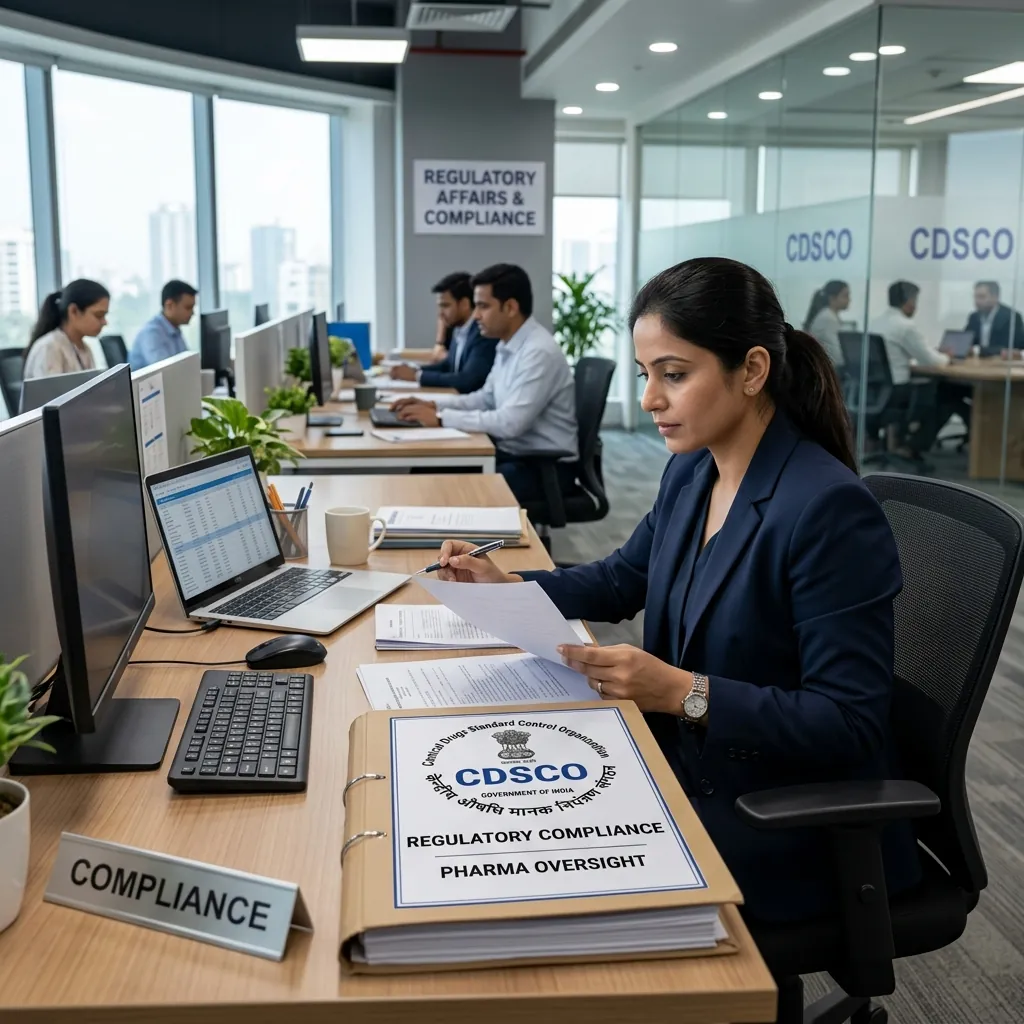
Medical Device Project Report Preparation
Turn a plan into a submission-ready package — technical and regulatory project reports, dossiers and compliance documentation compiled correctly for CDSCO licensing, banks, subsidy schemes and internal approval.
Service Overview
Almost every serious step in a medical-device or pharmaceutical project needs a report to support it — a bank wants one before it lends, a subsidy scheme wants one before it grants, a board wants one before it approves, and a regulator wants a technical dossier before it licenses. These reports are not interchangeable; each audience reads for different things, and a document written for one rarely satisfies another. Getting the right report, in the right form, for the right reader is a skill in itself, and it is what turns a good plan into a package that actually opens doors.
Where our Detailed Project Report service focuses on the feasibility and the bankable financial case for an investment decision, project report preparation is broader: it is the disciplined compilation of whatever reports and documentation a particular purpose demands, written to the standard that purpose requires. Sometimes that is a technical project report for setting up a facility; sometimes a regulatory dossier for licensing; sometimes a tailored report for a specific bank or government scheme. The common thread is that each is prepared to genuinely persuade its reader.
The quiet failure in this area is the generic report — one document produced and then sent to every audience in the hope it will do. A bank’s credit committee, a CDSCO reviewer and a subsidy administrator want fundamentally different things, and a report that tries to serve all of them usually satisfies none. We prepare reports that are fit for their specific purpose, structured and evidenced the way that particular reader expects, which is precisely why they land rather than bounce.
For the regulatory dossiers in particular, the standard is exacting. A CDSCO technical file has to be complete, internally consistent, and structured the way reviewers read it, because gaps and contradictions between documents are exactly what generate queries and delays. Compiling these dossiers is meticulous work — pulling together specifications, validation, quality records and evidence into a coherent whole — and it is where an experienced hand saves an enormous amount of back-and-forth with the authority.
Project report preparation also connects to everything around it. The technical reports draw on the facility and quality system work; the regulatory dossiers feed the CDSCO registration and manufacturing licence; the financial and funding reports lean on the feasibility work. A team that produces these reports as part of a coherent project, rather than as isolated documents, produces reports whose numbers and claims actually hold together across the whole undertaking.
We prepare the full range of project reports and documentation a medical-device or pharma project needs — technical, regulatory, financial and funding-specific — each written to the standard its reader demands, so your plan reaches every gatekeeper as a persuasive, complete and consistent package rather than a document that has to be explained or redone.
Key Takeaways
- A project report translates your device plan into the format banks, investors and subsidy schemes actually accept.
- Realistic capex, regulatory timelines and break-even numbers are what get a report funded rather than filed.
- Building the regulatory pathway into the financials keeps the projections credible.
One Project, Many Reports, Many Readers
A medical-device project generates a surprising number of reporting needs over its life, and each one has a different reader with different priorities. A lender reads for risk and return and the credibility of the numbers; a CDSCO reviewer reads for completeness, consistency and regulatory conformity; a subsidy administrator reads for eligibility against specific scheme criteria; a board reads for strategic fit and the honesty of the case. The same underlying facts have to be presented very differently to satisfy each of them.
Recognising that these are genuinely different documents — not one report in different covers — is the starting point for preparing them well. We identify what each report actually needs to achieve and who will read it, then build it to speak to that reader. A report that knows its audience is persuasive; one that ignores the difference, however thorough, tends to leave every reader feeling it was written for someone else, which is the fastest way to a rejection or a request for more.
- Lenders read for risk, return and credibility.
- Regulators read for completeness and consistency.
- Scheme administrators read for eligibility against criteria.
Technical Project Reports
A technical project report describes how a facility or process will actually be built and operated — the product and its specifications, the manufacturing process, the plant and equipment, the utilities and services, the layout and cleanroom requirements, and the staffing and controls. It is the document that translates an intention to manufacture into a concrete, buildable plan, and it underpins both the engineering that follows and the regulatory case that the facility can make good product safely.
We prepare these reports grounded in the real requirements of regulated device manufacturing, drawing on the facility, cleanroom and quality-system work so the report describes a plant that will genuinely function and pass audit, not an idealised one. A technical project report written by people who understand what a CDSCO inspection will later demand is one whose plan does not need quiet rework once the regulatory reality is confronted — a common and costly failing of reports produced without that lens.
Regulatory Dossiers Done Meticulously
The most demanding reports are the regulatory dossiers, because their reader is a trained reviewer looking specifically for gaps and contradictions. A CDSCO technical file has to be complete — every required element present — and internally consistent, so that a specification in one document matches the test record in another and the label matches the claim. Inconsistency between documents is the single most common trigger for queries, and each query adds weeks to a timeline.
We compile regulatory dossiers with the meticulousness this demands: assembling the specifications, validation, quality records, evidence and declarations into a coherent whole, cross-checking every claim against its support, and structuring the file the way reviewers actually read it. This is painstaking work, but it is where the difference between a smooth review and a drawn-out one is largely decided. A dossier that holds together under a reviewer’s scrutiny is worth far more than one that is merely thick.
Reports for Banks and Subsidy Schemes
Funding reports are their own craft. A bank’s project report has to present the investment in the terms a credit committee lives by — credible costs, realistic revenues, defensible returns, and honest risk — and structured the way that particular lender expects to receive it. Government subsidy and incentive schemes for medical-device manufacturing add another layer: each has specific eligibility criteria and reporting formats, and a report that does not speak directly to those criteria simply does not qualify, however good the underlying project.
We prepare funding reports to match their target, whether a specific bank or a particular scheme, presenting the project in the required form and making the strongest honest case for support. India has actively encouraged domestic medical-device manufacturing, and a report built to a scheme’s expectations can materially strengthen access to that support. Knowing what each funder needs to see, and giving it to them in their own format, is what turns a fundable project into a funded one.
- Bank reports built for a credit committee’s priorities.
- Scheme reports matched to specific eligibility criteria and formats.
- The strongest honest case, in the reader’s required form.
Consistency Across the Whole Package
When a project generates several reports for several audiences, a subtle risk emerges: the reports can drift apart. The capacity assumed in the bank report differs from the capacity in the technical report; the timeline in the funding case does not match the regulatory plan; the numbers quietly diverge because different documents were prepared by different people at different times. A reader who sees two of your reports and notices they disagree loses confidence in all of them.
Because we prepare the reports as part of one coherent project rather than as isolated deliverables, they tell a consistent story. The technical plan, the financial case, the regulatory dossier and the funding report share the same underlying facts and assumptions, so they reinforce rather than contradict each other. This coherence across the package is invisible when it is present and glaring when it is absent, and it is one of the real advantages of having the whole reporting effort in one set of hands.
From Report to Execution
A project report is only as valuable as what it enables. The point of preparing it well is that it unlocks the next step — the loan drawn, the subsidy granted, the licence obtained, the board’s approval secured — so the project can actually proceed. A report that is impressive but does not move its reader to act has failed, however elegant; one that is clear, credible and fit for its purpose does its job even if it is unglamorous.
We keep that outcome in view throughout, preparing every report to actually achieve its purpose rather than merely to be comprehensive. And because we work across the whole project, the reports connect to the execution that follows: the technical report to the build, the dossier to the licence, the funding report to the money that pays for it. A report prepared with the next step firmly in mind is one that carries the project forward, which is, in the end, the only thing a project report is for.
Required Documentation
"Accurate documentation is 70% of the battle. Our experts pre-audit every file before submission."
Our Delivery Workflow
Define Purpose
We identify each report’s reader and what it must achieve — bank, regulator, scheme or board.
Compile
We assemble the technical, regulatory or funding report to that reader’s exact standard.
Cross-Check
We ensure the reports across the project are complete, consistent and mutually reinforcing.
Deliver
We deliver a persuasive, submission-ready package that unlocks the next step.
Frequently Asked Questions
Have questions? Find direct, humanized answers about the regulatory approvals and timelines.

Launch Your Product In Record Time
Red tape shouldn't decide your launch date. We keep the paperwork moving and the queries answered, so approvals come through sooner.